High-Performance Graphene ICF for Europe’s Hotter Summers Colder Winters | 350mm & Split Graphene
High-Performance Graphene ICF for a Changing European Climate
Europe's building requirements are changing.
For many years, energy-efficient construction in Europe was primarily discussed in terms of winter heating.
Today, European buildings increasingly need to deal with both extremes:
hotter summers + colder winters + higher energy costs + stricter building-efficiency requirements
The climate data from 2026 makes this shift particularly clear.
According to the Copernicus Climate Change Service, western Europe experienced its warmest June–July period on record, with the regional average temperature 2.79°C above the 1991–2020 reference period. The region also experienced repeated heatwaves during the period.
France provides an even more visible example.
Météo-France reported that June 2026 brought an exceptionally intense heatwave, with temperatures exceeding 40°C across more than 40% of French territory during the episode.
Some locations reached 42–43°C, while Strasbourg recorded 40.4°C for the first time in its measurement history.
The problem continued into July. Météo-France recorded temperatures of 42.1°C in Saintes, 41.2°C in Narbonne and 40.9°C in Perpignan, while July 2026 became the hottest July ever recorded in France.
This is no longer only a question of weather.
It is increasingly a building-envelope problem.
Why Thermal Insulation Matters More in European Construction
A building envelope has to work in both directions.
In winter, it needs to slow down heat loss from the heated interior.
In summer, it needs to reduce unwanted heat transfer from the hot exterior into the building.
That is why insulation is becoming increasingly important in European building design.
The European Commission states that buildings are the single largest energy consumer in Europe. Around 40% of energy consumed in the EU is used in buildings, while around 80% of household energy use is associated with heating, cooling and hot water. The EU's Energy Performance of Buildings Directive specifically identifies the building envelope and insulation as important factors in building energy performance.
In other words:
A better building envelope can reduce the amount of energy required to maintain indoor comfort.
This is where a high-performance ICF system becomes relevant.
Sunforest ICF: Designed Around the Building Envelope
Hangzhou Sunforest Constech Co., Ltd. is a China-based ICF manufacturer serving international construction markets.
Our ICF product range includes:
High-density white ICF
Split Type ICF
350mm Graphene ICF
Split Graphene ICF
Customized ICF systems
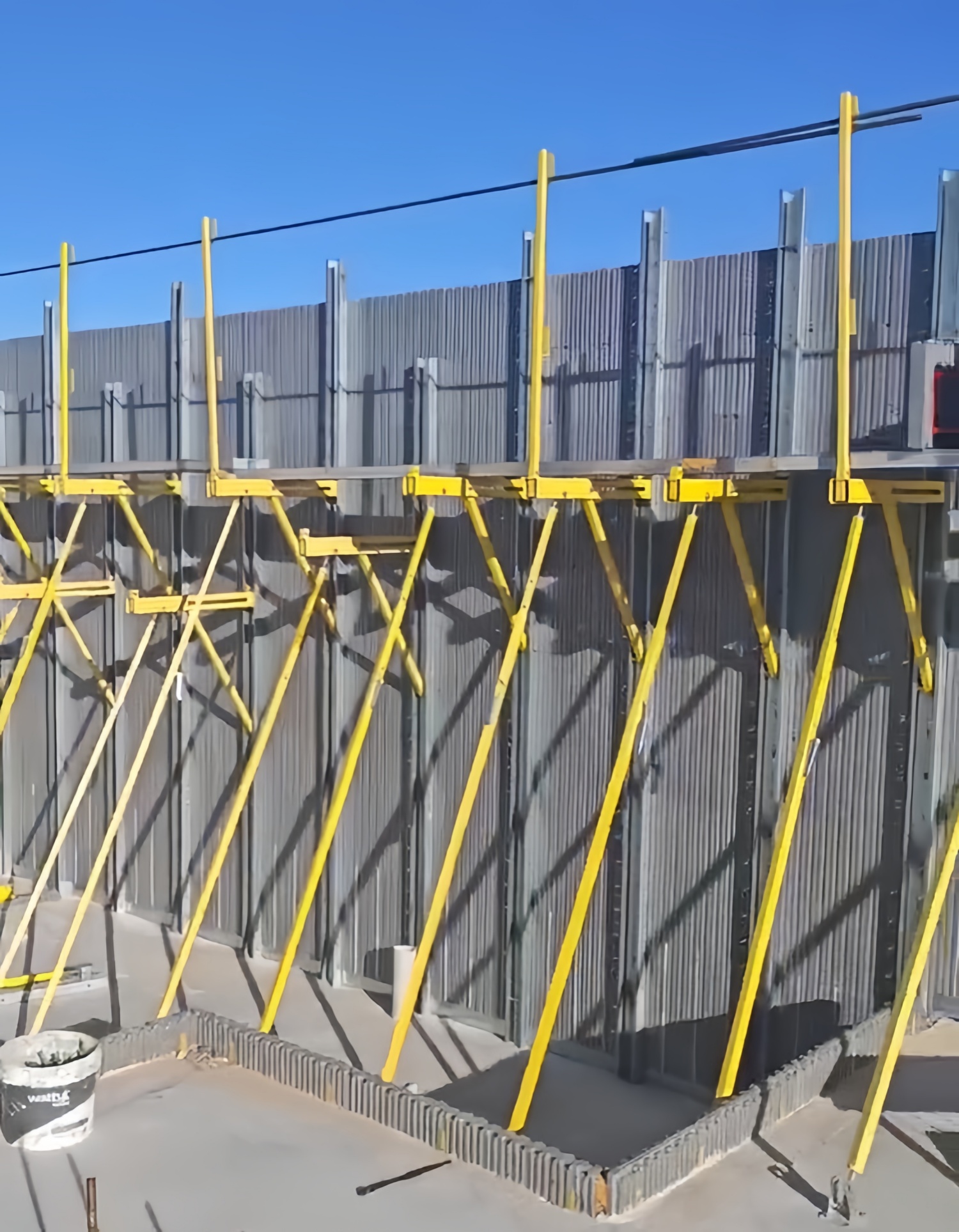
ICF bracing and alignment systems
Our focus is not simply to manufacture EPS blocks.
We develop ICF systems around practical construction requirements such as:
Thermal insulation
Structural stability
Construction efficiency
Transportation efficiency
Climate adaptability
International export requirements
For Europe, one of the most important characteristics is the thermal performance of the insulation layer.
Our conventional white ICF sample has been independently tested by Third-party independent organization.
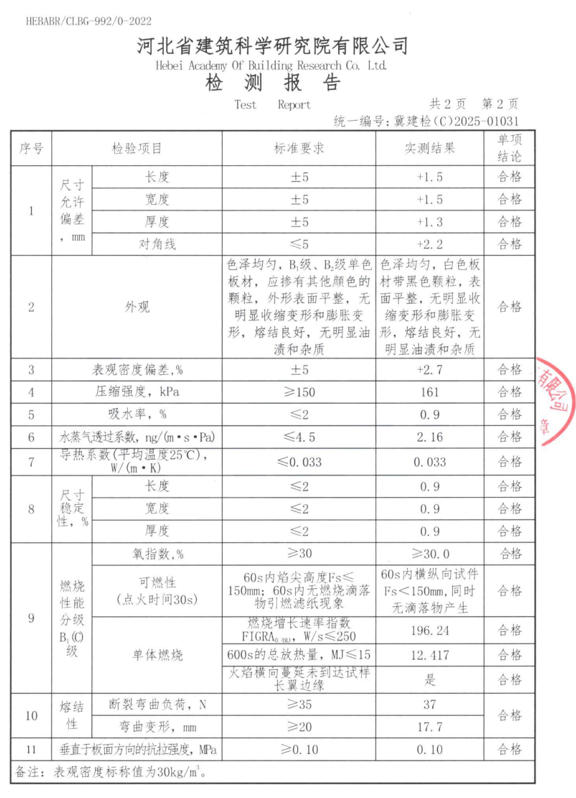
Independent Test Data: 30kg/m³ ICF with 0.033 W/(m·K) Thermal Conductivity
The tested sample was:
900 × 300 × 250 mm White Straight ICF Block
with an apparent density of:
30 kg/m³
The test report records a thermal conductivity requirement of ≤0.033 W/(m·K) and an actual measured result of:
0.033 W/(m·K)
The sample was assessed as qualified in the report.
This is one of the most important technical indicators when evaluating thermal insulation materials.
A lower thermal conductivity generally means the material provides greater resistance to conductive heat transfer for a given thickness.
For European applications, this matters in both summer and winter.
What Does 0.033 W/(m·K) Mean for a Building?
Thermal conductivity, commonly represented by λ, describes how readily heat moves through a material.
The lower the value, the harder it is for heat to pass through the material by conduction.
Our tested value:
λ = 0.033 W/(m·K)
means the tested EPS material provides a strong thermal-insulation basis for ICF wall construction.
However, an important technical distinction should be made:
0.033 W/(m·K) is the tested thermal conductivity of the material/sample; it is not the R-value of the complete finished ICF wall.
The final thermal performance of a completed ICF wall also depends on:
EPS thickness
Concrete core thickness
Reinforcing details
Connectors
Surface finishes
Thermal bridges
Wall assembly
Installation quality
For project-specific energy calculations, the complete wall assembly should be evaluated rather than using the EPS conductivity value alone.
30kg/m³ Density: More Than Just an Insulation Number
The test report records an apparent density of:
30kg/m³
The report also shows:
Compressive Strength
161 kPa
against a tested requirement of ≥150 kPa.
Water Absorption
0.9%
against a requirement of ≤2%.
Water Vapor Permeability
2.16 ng/(m·s·Pa)
against a requirement of ≤4.5.
Dimensional Stability
The tested dimensional stability values were 0.9% for length, width and thickness against a ≤2% requirement.
These results show that the sample was not evaluated only for thermal performance. Mechanical and dimensional properties were also included in the testing.
Why Dimensional Stability Matters for ICF Walls
Thermal insulation is only one part of a good ICF system.
ICF blocks must also maintain their dimensions during storage, transportation and construction.
A dimensionally stable ICF form helps contractors maintain:
Accurate wall geometry
Proper block alignment
Consistent joints
Correct concrete cavity dimensions
More predictable installation
This becomes especially important when large quantities of ICF are assembled into long wall runs.
The test sample recorded approximately 0.9% dimensional stability deviation, below the stated 2% requirement.
Low Water Absorption for Long-Term Building Applications
The tested sample recorded a water absorption value of:
0.9%
against a requirement of ≤2%.
For insulation materials, moisture behavior matters because excessive moisture can affect thermal performance and material durability.
For ICF construction, maintaining a controlled and stable insulation material is therefore important from the manufacturing stage through to building installation.
ICF for Europe's Hot Summers
A common misconception is that insulation is mainly useful in cold climates.
In reality, insulation also plays an important role during hot weather.
When outdoor temperatures rise significantly above indoor temperatures, heat naturally attempts to move into the building.
A well-insulated building envelope slows this heat transfer.
This can help reduce the cooling load placed on:
Air-conditioning systems
Heat pumps
Cooling equipment
Electrical infrastructure
The relevance is becoming clearer as European heatwaves become more persistent.
In 2026, western Europe experienced repeated heatwaves from late spring through summer.
For building owners, developers and architects, this creates a strong incentive to think about summer thermal performance, not only winter insulation.
ICF for Europe's Cold Winters
The same building-envelope principle works in the opposite direction.
During winter:
Indoor heat → wants to escape → external environment
A well-insulated wall reduces the rate of conductive heat transfer.
This can help buildings maintain stable indoor temperatures with less heating input.
For colder European markets, ICF can therefore be considered as part of a high-performance wall strategy for:
Residential housing
Passive-house-oriented projects
Energy-efficient homes
Multi-family buildings
Commercial buildings
Low-energy construction
The European Commission's building-performance framework specifically recognizes insulation and the building envelope as important factors in reducing building energy consumption.
One Wall System for Both Summer and Winter Performance
This is one of the fundamental advantages of a continuously insulated ICF wall.
The same insulation layer helps address two opposite seasonal problems:
Summer
Reduce heat entering the building
Winter
Reduce heat escaping from the building
Instead of using one material strategy for winter and another for summer, the building envelope provides continuous thermal resistance throughout the year.
For European builders, this makes ICF particularly relevant as climate conditions become more demanding.
350mm Graphene ICF for Extreme-Climate Applications
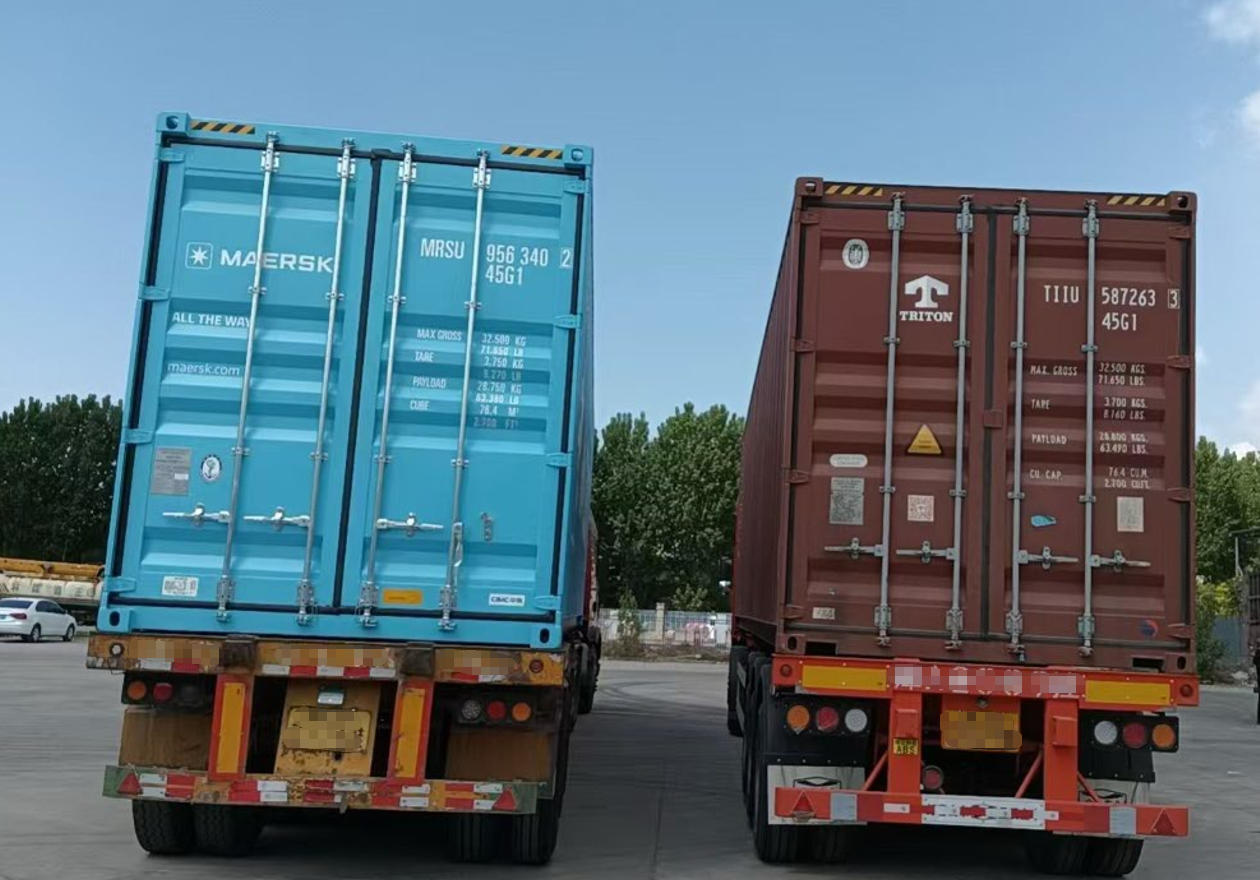
Sunforest has recently exported 350mm Graphene ICF to European customers.
This product is intended for applications where a particularly substantial insulation envelope is desired.
The increased overall wall-form thickness provides more insulation material than conventional narrower ICF configurations.
This makes 350mm Graphene ICF particularly relevant for:
Cold northern European climates
Hot southern European climates
High-performance residential buildings
Energy-efficient construction
Buildings with demanding thermal-envelope requirements
The 350mm configuration gives architects, developers and builders another option when a thicker insulated wall system is required.
Split Graphene ICF: High-Performance Insulation with Export-Friendly Design
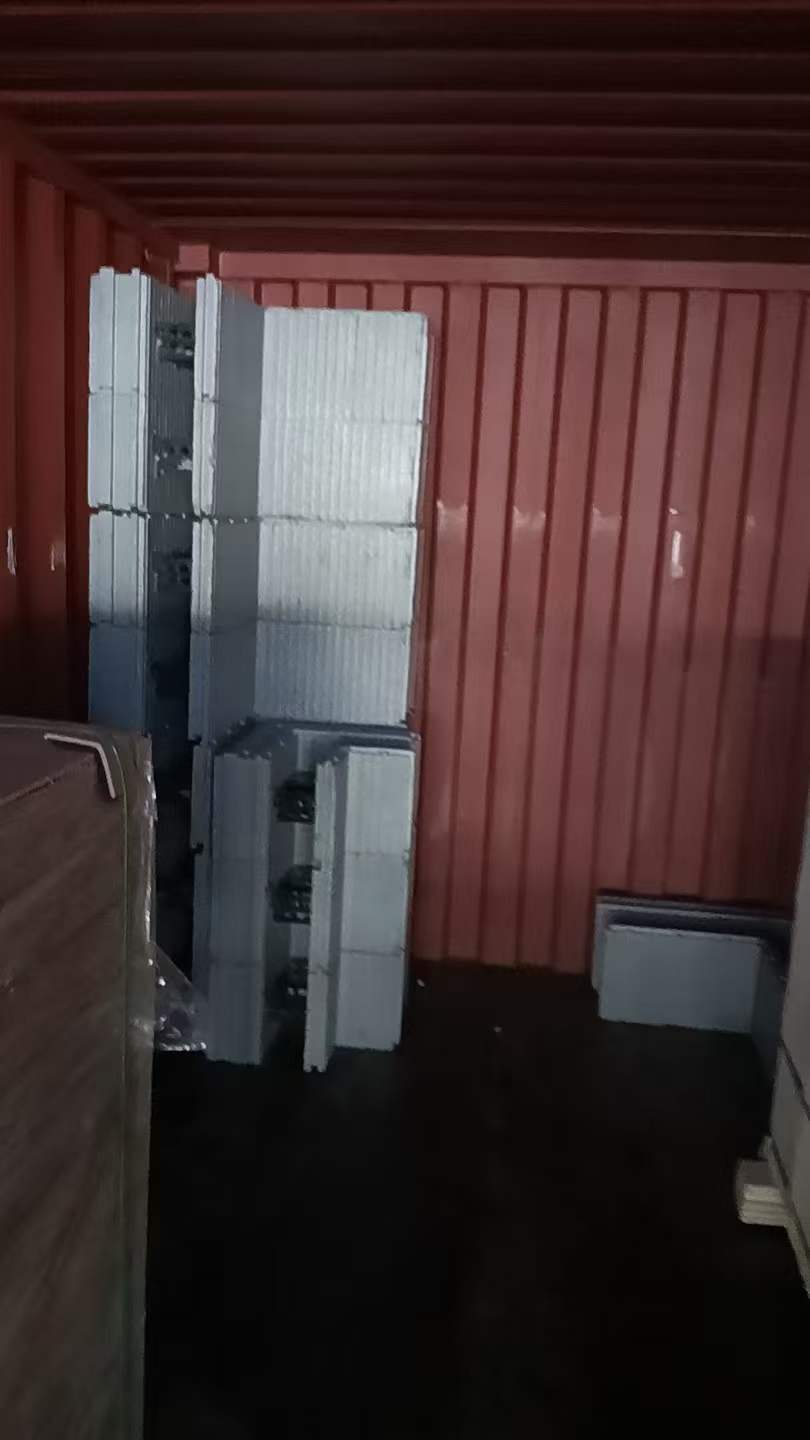
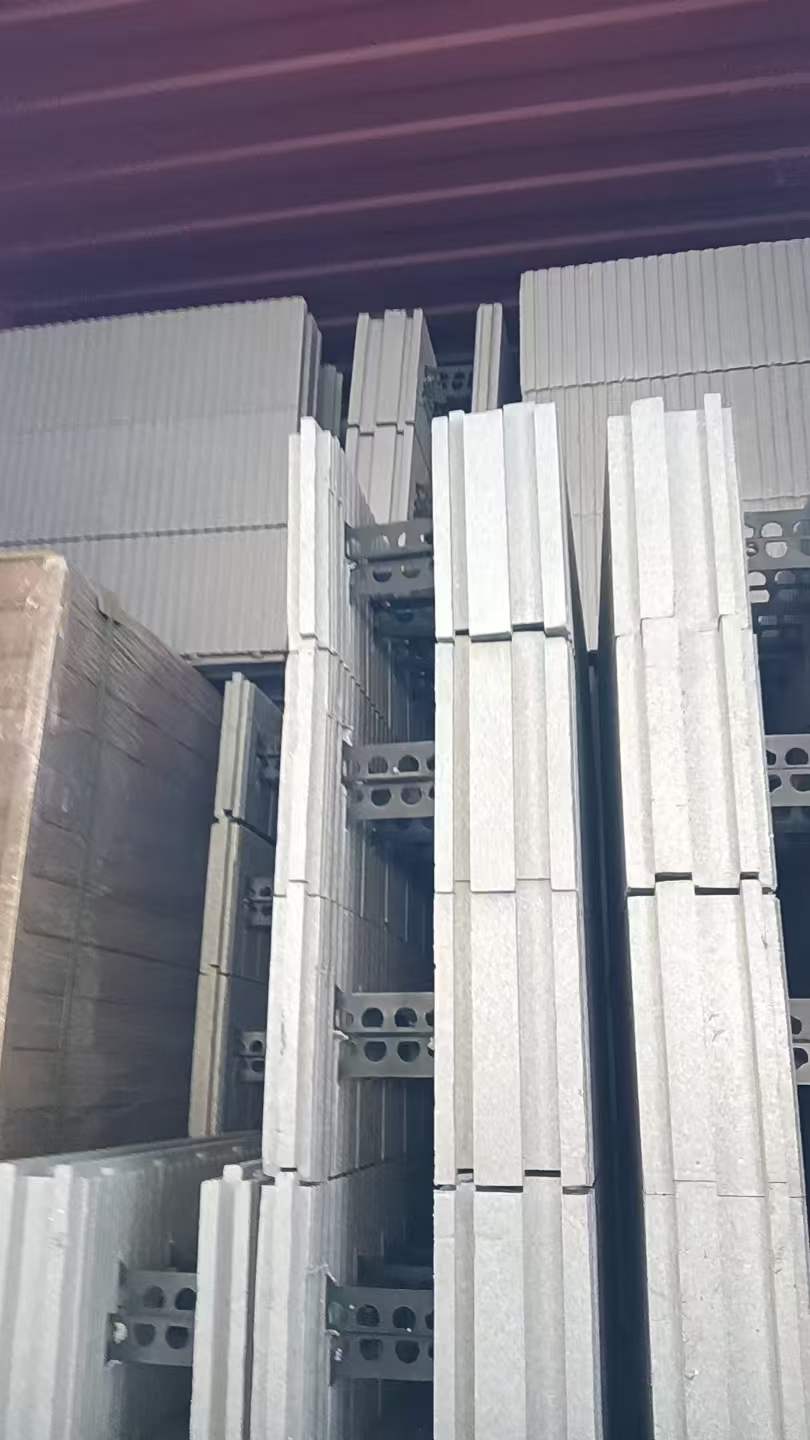
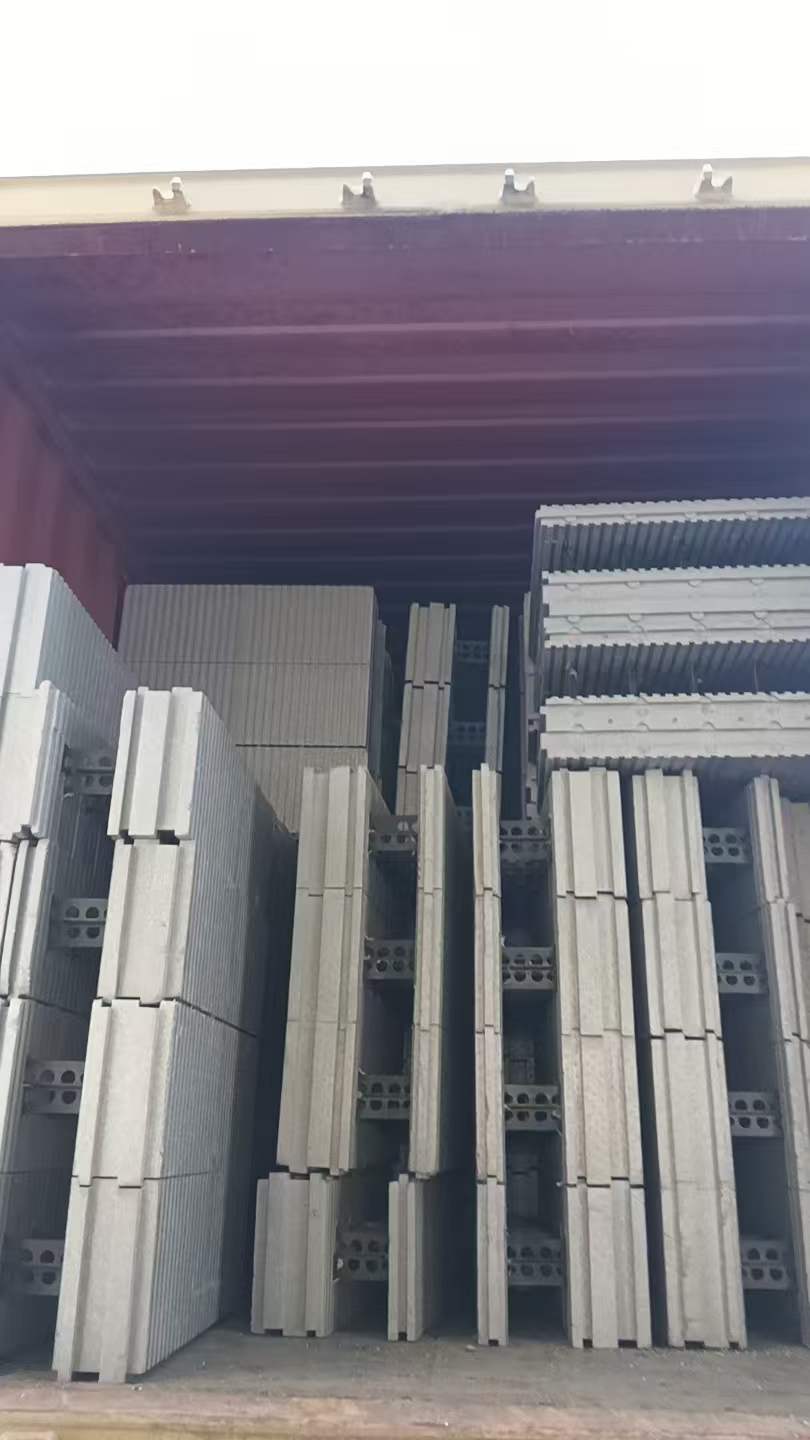
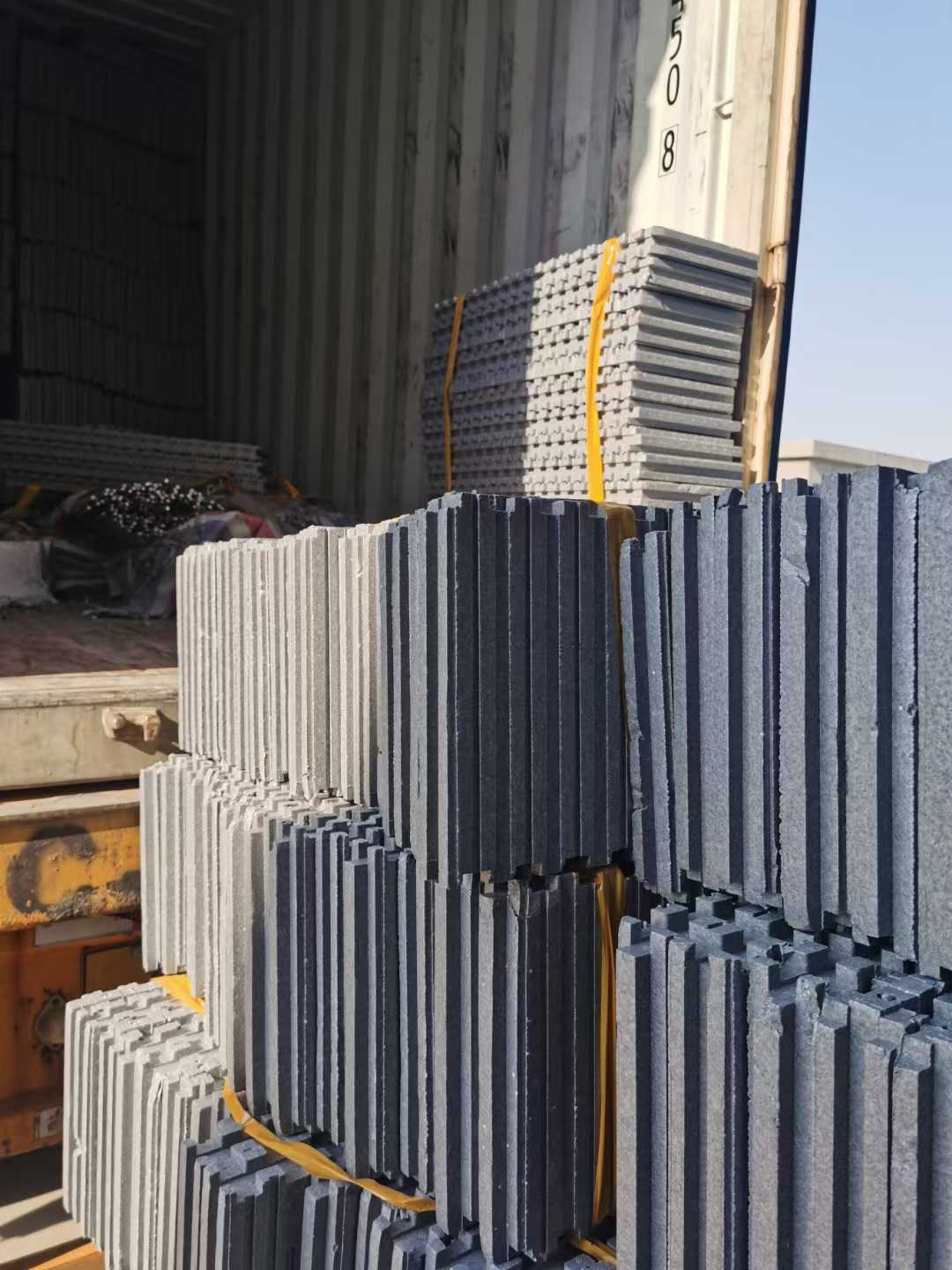
Sunforest has also recently exported Split Graphene ICF products to Europe.
The Split Graphene ICF concept combines the high-insulation concept of Graphene ICF with Sunforest's Split Type ICF design.
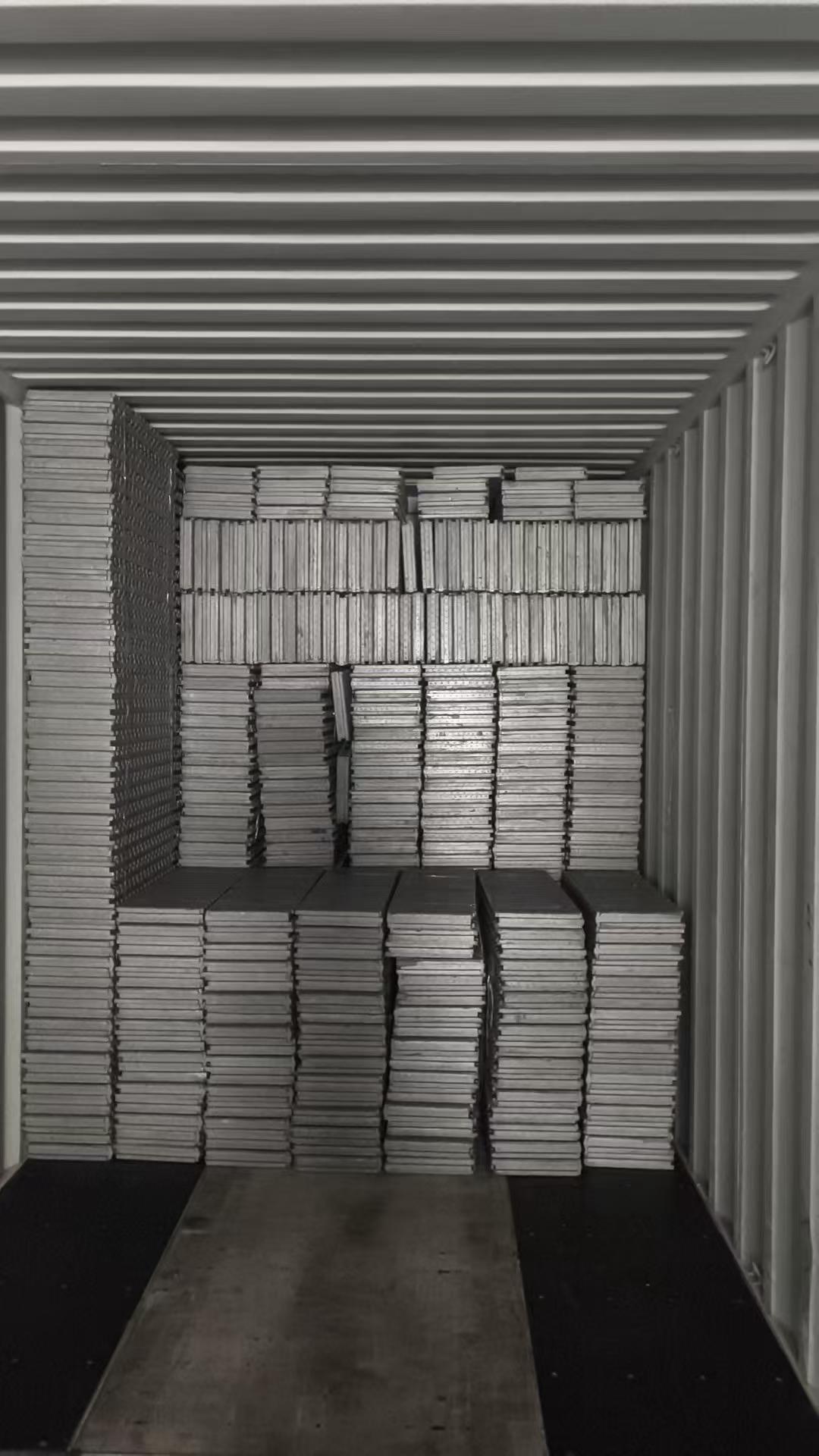
The purpose of the Split Type structure is to separate the ICF components during transportation, reducing shipping volume and improving container utilization.
For international European customers, this can provide an additional advantage:
High-performance insulation + more efficient international transportation
This is especially relevant for distributors, importers and contractors purchasing ICF from overseas.
Instead of optimizing only the thermal performance of the product, Sunforest also considers:
Container loading
Shipping volume
Warehouse requirements
Transportation cost
Inventory efficiency
This is an important part of our approach as an international ICF manufacturer.
Why Split Graphene ICF Is Important for European Importers
A high-performance ICF system is only economically attractive if it can also be transported efficiently.
Traditional one-piece high-thickness ICF products can occupy a substantial amount of container volume.
Sunforest's Split Type concept is designed to address this logistical challenge.
For European distributors and importers, the combination of:
High thermal-performance ICF + Split Type construction
can potentially improve the economics of international sourcing.
The actual container loading quantity depends on the final product dimensions and packaging configuration, so Sunforest provides project-specific loading calculations before shipment.
350mm Graphene ICF and Split Graphene ICF: A New European Product Direction
Sunforest's recent European shipments reflect a broader product-development strategy.
The market is not asking only for:
"More insulation."
It is also asking for:
"More insulation + lower energy demand + practical transportation + competitive total cost."
This is why Sunforest continues to develop new ICF configurations for different international markets.
The combination of:
350mm Graphene ICF
and
Split Graphene ICF
allows us to address both thermal-envelope requirements and international logistics considerations.
Environmental Pressure Is Also Changing Building Decisions
Extreme weather is only one side of the problem.
European policymakers are also pushing toward higher building efficiency and lower operational energy use.
The European Commission's revised Energy Performance of Buildings Directive aims toward a fully decarbonised building stock by 2050. It also highlights the importance of improving building performance to reduce energy consumption and bills.
The European Environment Agency likewise reports that Europe is warming at roughly twice the global average, while facing increasing risks from extreme heat, droughts, wildfires and other climate hazards.
This creates a long-term market direction:
Buildings must become more resilient and more energy efficient.
A Building Material Is Not "Green" Simply Because It Saves Energy
At Sunforest, we believe technical claims should be based on measurable performance.
Instead of simply calling ICF an "eco-friendly building material", we focus on the parameters that engineers and professional buyers can actually evaluate.
For our tested white ICF sample, these include:
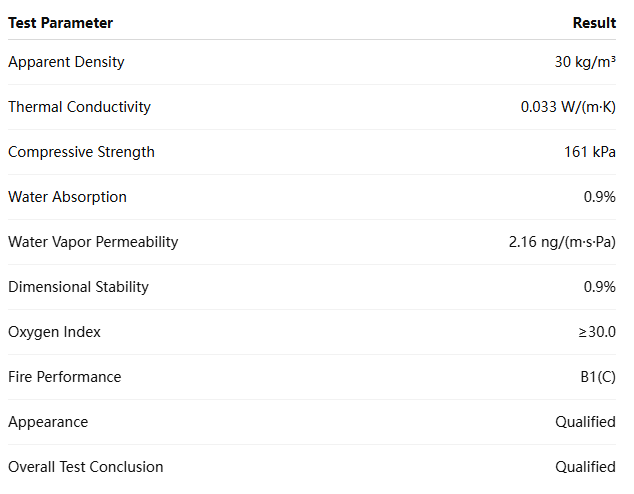
These figures come directly from the uploaded laboratory test report for the 900 × 300 × 250 mm white straight ICF sample.
Fire Performance Is Also Part of the Technical Picture
The report also includes fire-performance testing.
The tested sample recorded an oxygen index of ≥30.0 and was classified as B1(C) under the report's testing framework.
The report also records a 600-second total heat release of 12.417 MJ in the single-burning-item test and a fire-growth-rate index of 196.24.
These laboratory results are useful technical reference points for product evaluation.
However, building fire performance depends on the complete wall assembly and the applicable European national/local regulatory requirements, not on the foam material test alone.
Why European Builders Are Looking More Closely at ICF
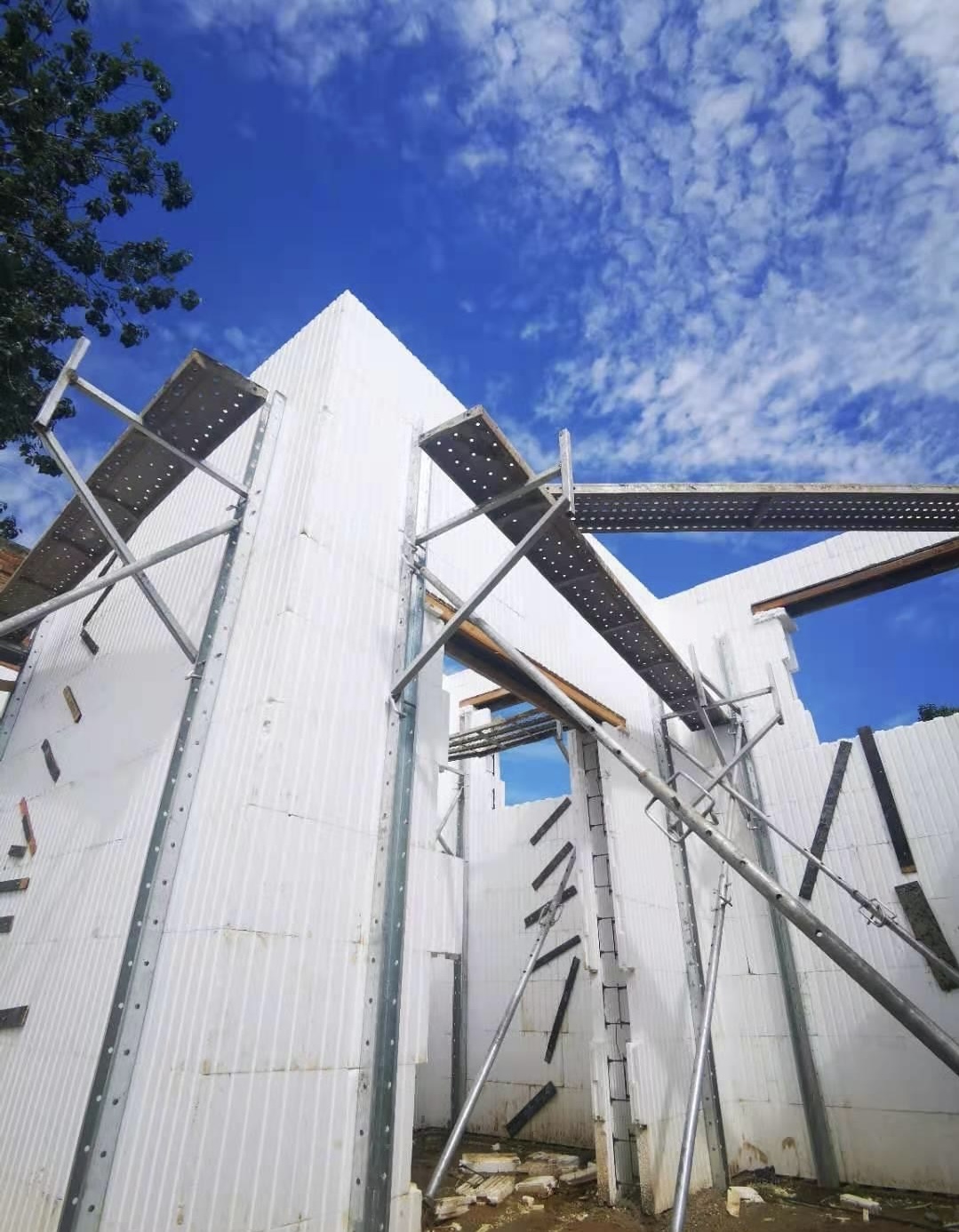
For European construction companies, ICF is increasingly interesting because it combines several building functions in a single construction system.
The ICF form provides:
Insulation + Concrete Formwork + Permanent Insulated Wall Envelope
This can simplify the way contractors approach the wall construction process.
For developers and building owners, the potential value is longer-term:
Better thermal envelope → lower heating/cooling demand → improved indoor comfort → lower operational energy consumption
The exact energy savings will depend on the building design, climate, HVAC system, occupancy, orientation, windows and many other factors.
Sunforest: ICF Manufacturer and Global Export Partner
Sunforest is not simply a trader sourcing generic EPS blocks.
We manufacture and develop ICF systems for international markets.
Our product range includes:
White ICF | High-Density ICF | Split Type ICF | 350mm Graphene ICF | Split Graphene ICF | ICF Bracing | Foldable ICF Bracing | Storage Solutions
Our engineering team works with overseas builders, distributors and developers to select the appropriate product configuration according to:
Climate
Wall thickness
Concrete core
Project scale
Shipping requirements
Construction method
Local market requirements
We also provide technical and export support for customers in Europe and other international markets.
Tested Data + Engineering + Export Experience
For professional customers, product sourcing should not stop at a catalog photograph.
Sunforest can provide technical information such as:
Laboratory test reports
Product specifications
CAD drawings
Installation information
Container loading plans
Product photos
Factory production videos
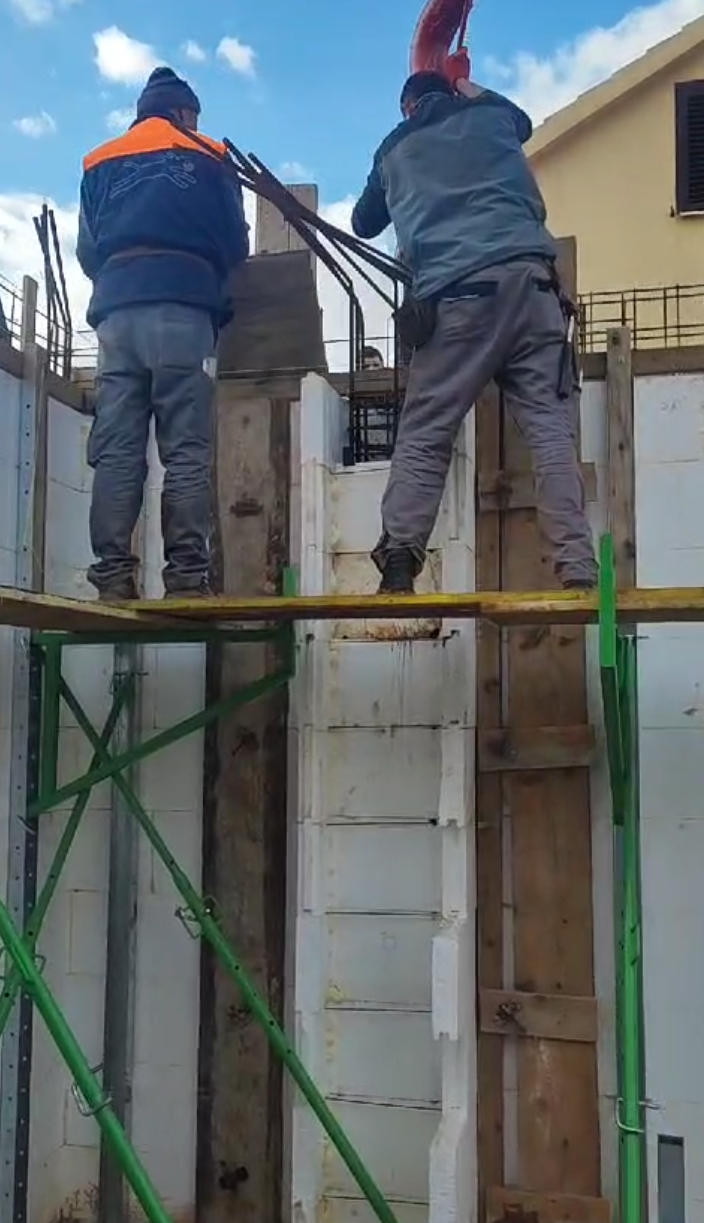
Real project photos
Export references
This allows architects, contractors, distributors and purchasing teams to evaluate the product based on measurable information.
Who Can Benefit from Sunforest ICF in Europe?
Our ICF products are suitable for companies including:
European ICF builders
Residential contractors
Building developers
Construction distributors
Building-material importers
Energy-efficient building specialists
Passive-house-oriented builders
Prefabricated building companies
Sustainable construction companies
Regional ICF distributors
Whether your project is located in Northern Europe, Central Europe or Southern Europe, the correct ICF configuration can be selected according to the local climate and project requirements.
Build for Europe's Future Climate
Europe's climate is becoming more challenging.
Hot summers are placing greater pressure on cooling and indoor comfort.
Cold winters continue to create heating requirements.
At the same time, European energy and building policy is moving toward more efficient and lower-emission buildings.
In this environment, the building envelope becomes increasingly important.
Sunforest's 30kg/m³ high-density white ICF, independently tested at 0.033 W/(m·K) thermal conductivity, provides measurable insulation performance for ICF wall construction.
At the same time, our recently exported 350mm Graphene ICF and Split Graphene ICF provide additional solutions for European projects where higher-performance insulation and efficient international logistics are important.
The future of European construction is not simply about building stronger walls.
It is about building walls that help buildings stay comfortable with less energy input.
Contact Sunforest for European ICF Projects
If you are a European builder, contractor, distributor, developer or building-material importer looking for a reliable ICF manufacturer in China, Sunforest can provide technical and commercial support for your project.
Tell us:
Project country
Building type
Wall thickness
Required concrete core
Estimated quantity
Climate conditions
Shipping destination
Our team can recommend the appropriate ICF configuration, including 350mm Graphene ICF, Split Graphene ICF and high-density white ICF, according to the actual project requirements.
Hangzhou Sunforest Constech Co., Ltd.
ICF Manufacturer | ICF Engineering | Global Export Partner
Frequently Asked Questions
What ICF products does Sunforest currently export to Europe?
Sunforest has recently exported 350mm Graphene ICF and Split Graphene ICF to European customers, in addition to its conventional high-density white ICF products.
What is the thermal conductivity of Sunforest ICF?
The uploaded laboratory report for the 900 × 300 × 250 mm white straight ICF sample with 30kg/m³ density recorded a thermal conductivity of 0.033 W/(m·K). The specified requirement in the report was ≤0.033 W/(m·K), and the sample was recorded as qualified.
Is 0.033 W/(m·K) good for ICF insulation?
A lower thermal conductivity generally indicates better resistance to conductive heat transfer. Sunforest's tested value of 0.033 W/(m·K) provides a strong insulation basis for ICF construction. The thermal performance of a finished wall should be evaluated using the complete wall assembly rather than the EPS material value alone.
Can ICF help with hot European summers?
Yes. Insulation slows heat transfer from hot outdoor conditions into the building. This can help reduce cooling loads, although actual energy savings depend on the complete building design and HVAC system.
Can ICF also be used in cold European climates?
Yes. The same insulation principle helps reduce heat loss from the building during winter. ICF can therefore be used in both hot and cold climate construction.
What is 350mm Graphene ICF?
Sunforest 350mm Graphene ICF is a high-insulation ICF configuration developed for applications where a thicker insulated building envelope is desired. Sunforest has recently exported this product to Europe.
What is Split Graphene ICF?
Split Graphene ICF combines the Graphene ICF concept with Sunforest's Split Type design. The split structure is intended to reduce transportation volume and improve container utilization for international shipments.
Why is Split Graphene ICF useful for European importers?
International ICF sourcing is affected by both product performance and shipping volume. Split Graphene ICF is designed to combine high-performance insulation with a more shipping-efficient product configuration.
Is there a separate thermal-conductivity test for the 350mm Graphene ICF?
The test report provided for this article is for the 250mm-thick, 30kg/m³ white ICF sample. A separate numerical thermal-conductivity value for the 350mm Graphene ICF has not been provided here, so we do not use the white ICF test result as a substitute for the Graphene ICF.
Is there a separate test report for the Split Graphene ICF?
The laboratory report provided here relates to the 900 × 300 × 250 mm white straight ICF sample. Product-specific technical data for the Split Graphene ICF should be evaluated using the relevant product specification or dedicated test report.
What density is the tested Sunforest ICF sample?
The test report identifies the tested sample as 30kg/m³ apparent density.
What was the compressive strength of the tested ICF?
The tested compressive strength was 161 kPa, against a stated requirement of ≥150 kPa.
What was the water absorption of the tested sample?
The measured water absorption was 0.9%, compared with a stated requirement of ≤2%.
Does the test report include fire-performance data?
Yes. The report records an oxygen index of ≥30.0 and a B1(C) fire-performance classification under the stated test framework.
Why is ICF becoming more relevant in Europe?
European buildings face growing pressure from hotter summers, winter heating requirements and stricter energy-performance targets. The European Commission identifies building-envelope performance and insulation as key factors in reducing building energy consumption.
Can Sunforest provide ICF for European projects?
Yes. Sunforest can support European builders, distributors, developers and importers with product specifications, technical information, CAD drawings, export packaging and shipping coordination.
Interested in starting your own ICF & ICF bracing order? Contact us at [email protected] or WhatsApp +86 15715734057— we'll help you build your business.