Split ICF Wall System: How Sunforest's Assembled-Panel Design Cuts Container Cost, Freight Waste
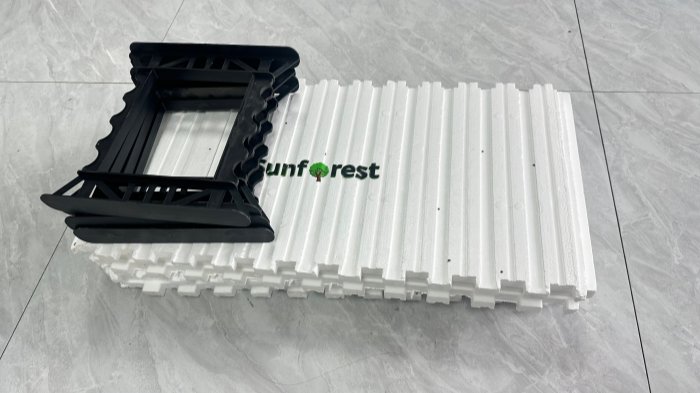
split (assembled-panel) ICF design engineered specifically to raise container utilization vs. one-piece blocks
Available in 250mm (interior/light exterior) and 280mm (exterior wall) thickness lines
Regular white EPS and graphite composite black EPS cavity options
Type 25 / Type 28 split plastic connector systems, factory-manufactured, not field-improvised
CMA-certified test data: 161 kPa compressive strength, 0.033 W/(m·K) thermal conductivity, 30kg/m³ nominal density
Flat-panel components stack more efficiently in transit and in yard/warehouse storage than pre-formed one-piece blocks
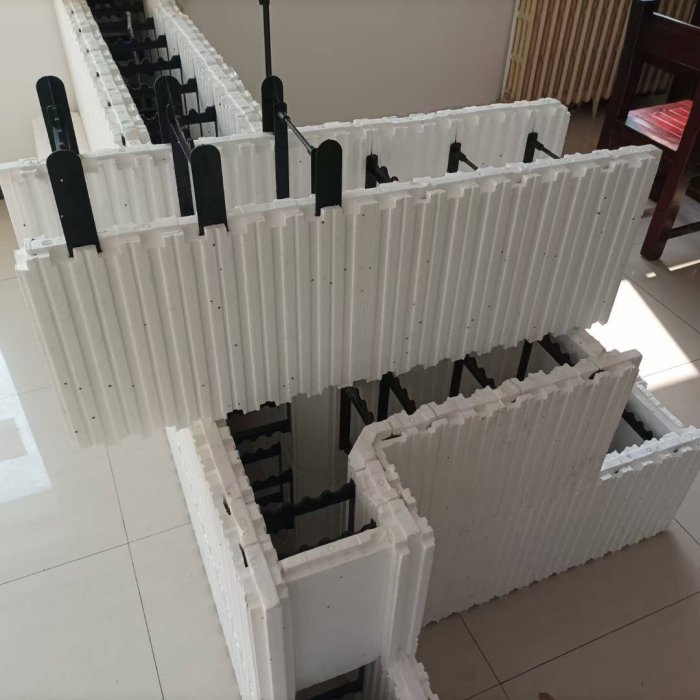
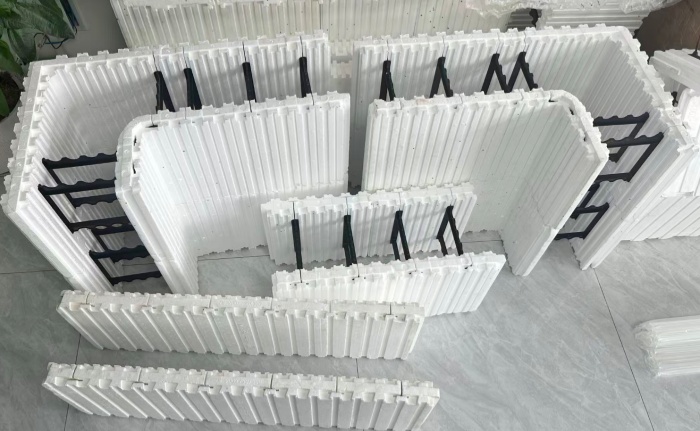
Full shape range: straight, Tee, corner, and insert/closure blocks for real wall geometries
Factory-direct manufacturer in Hebei, China — export experience across USA, Canada, Middle East, Europe, Australia
Hangzhou Sunforest Constech Co., Ltd is a China-based manufacturer of Insulated Concrete Forms (ICF) and ICF bracing systems, producing at its own facility in Hebei Province, and exporting through its Hangzhou office to builders, distributors, and rental companies across North America, the Middle East, Europe, Australia, and East Asia. One of the core engineering decisions behind Sunforest's standard ICF product line is the Split ICF wall system — an assembled-panel design built specifically to solve the freight-cost and storage problem that comes with shipping bulky, lightweight foam forms internationally.
This article explains what a Split ICF system is, how Sunforest classifies its Split ICF product line, and why the design matters for buyers evaluating total landed cost — not just per-unit price.
What Is a Split ICF Wall System?
A traditional one-piece ICF block is molded, cut, and shipped as a single rigid foam unit with a fixed cavity width. That works well for domestic, short-haul distribution — but foam ICF blocks are high-volume, low-weight cargo, which means one-piece blocks fill a shipping container's cubic space long before they reach its weight limit. For export-focused manufacturing, that mismatch is the single biggest driver of freight cost per square meter of wall coverage.
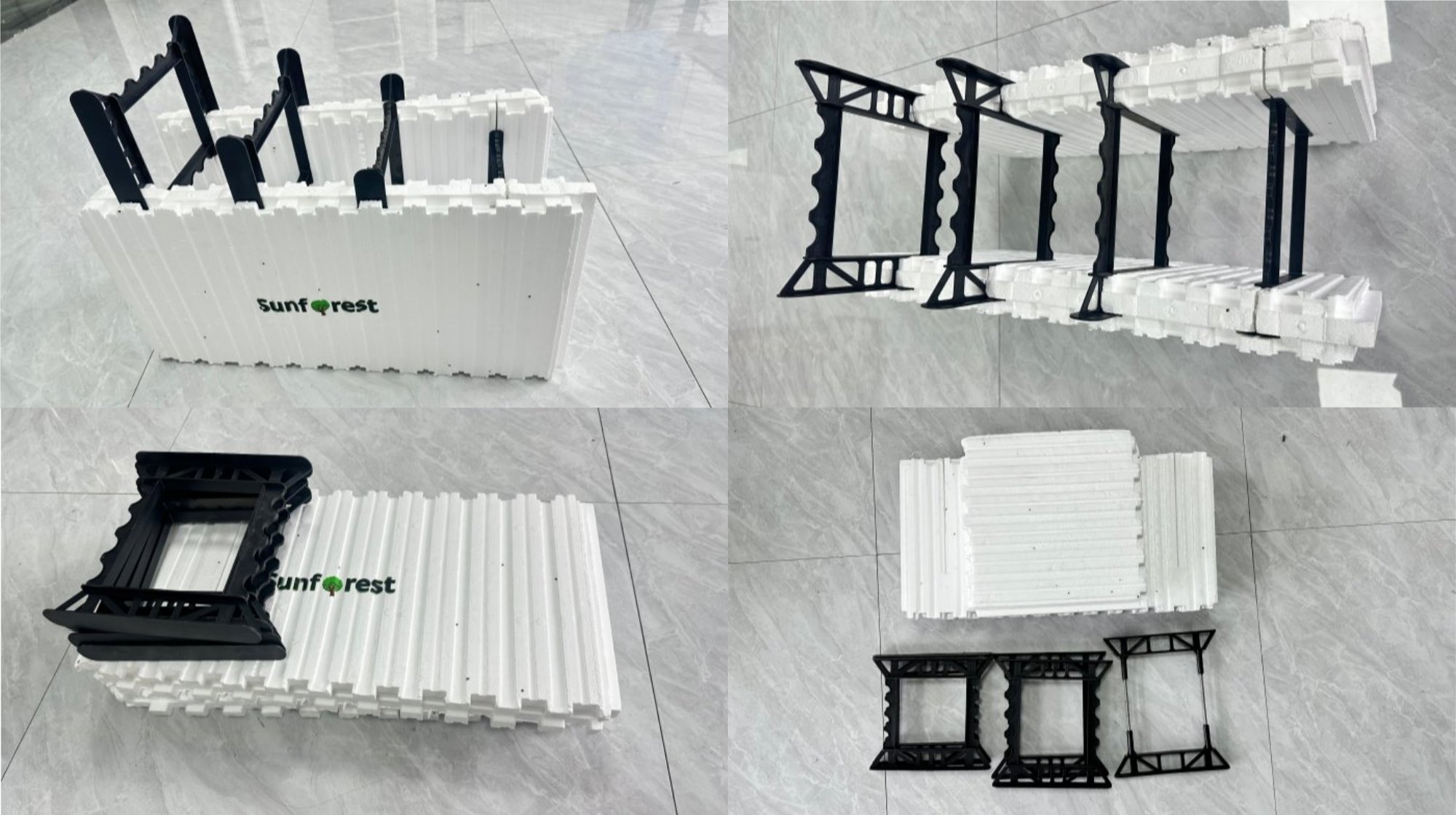
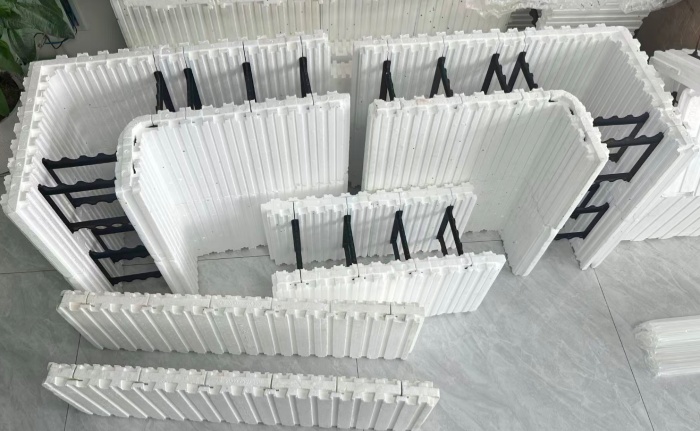
Sunforest's Split ICF wall system addresses this directly: instead of a single molded one-piece cavity block, the wall panel is manufactured as separate EPS side panels joined by an intermediate plastic connector system, factory-engineered to snap/assemble into the finished ICF form. The panels and connectors are produced to precise, repeatable factory tolerances — this is a manufactured product line, not a field workaround — and the assembled result functions as a standard ICF cavity form once connected.
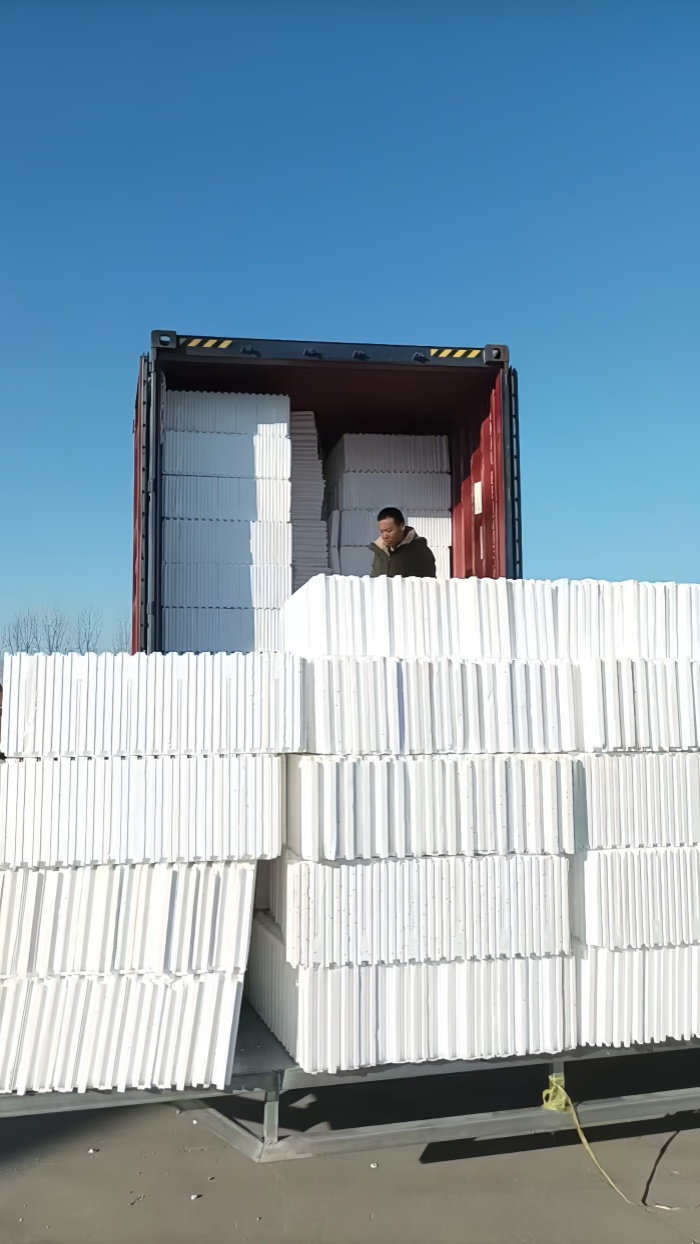
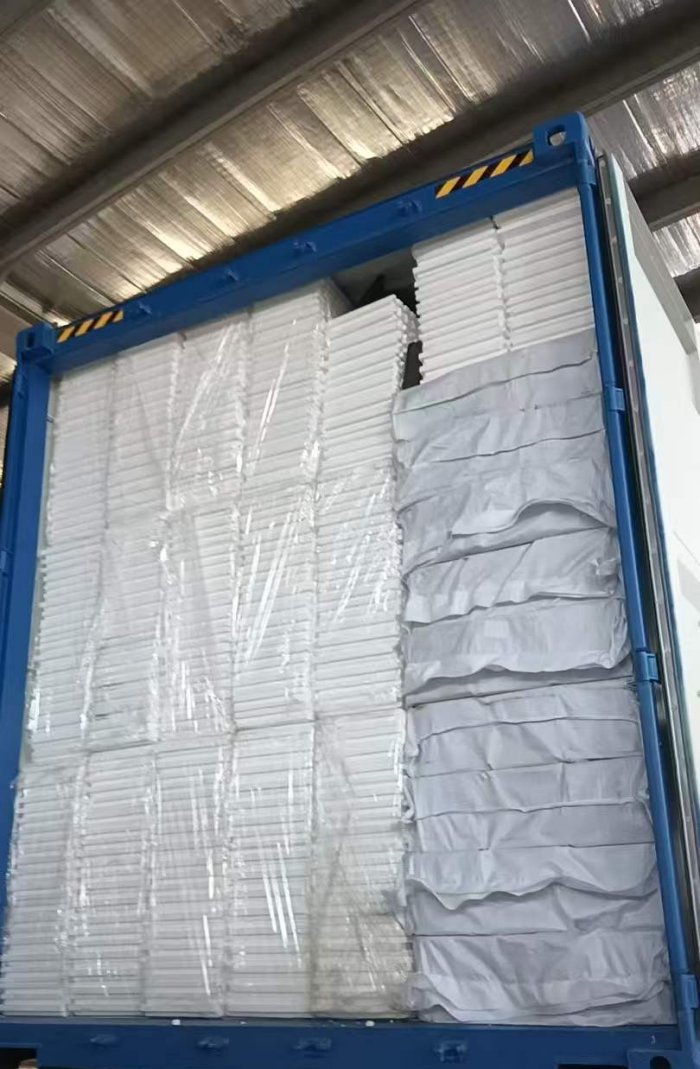
Because the components ship as flatter, more stackable panel sections rather than fixed bulky one-piece blocks, more usable wall coverage (m²) can be packed into the same container volume. This is the core logistics advantage of the Split ICF design, and it is the reason Sunforest engineered it into its standard 250mm and 280mm product lines.
How Sunforest Classifies Its Split ICF Product Line
Sunforest's Split ICF wall system is organized by thickness (connector type) and EPS material (cavity color),
giving four standard categories plus a passive-performance line currently in transition to split format:
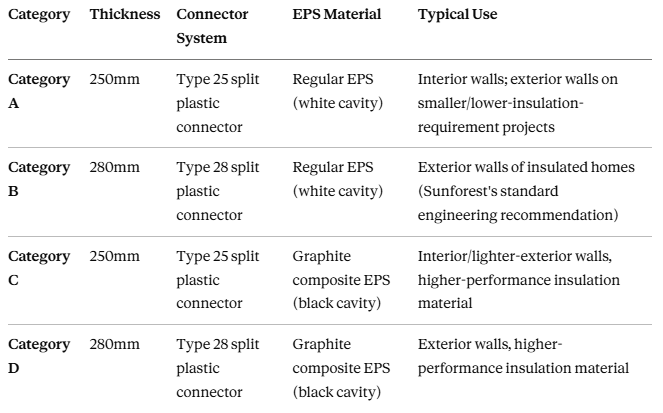
Both the 250mm and 280mm lines share the same block shapes and coverage-per-piece figures; the difference is concrete core thickness — 280mm carries a 170mm concrete core (with 55mm EPS on each face),
while 250mm carries a 140mm concrete core (also 55mm EPS on each face, 30mm less concrete than the 280mm type).
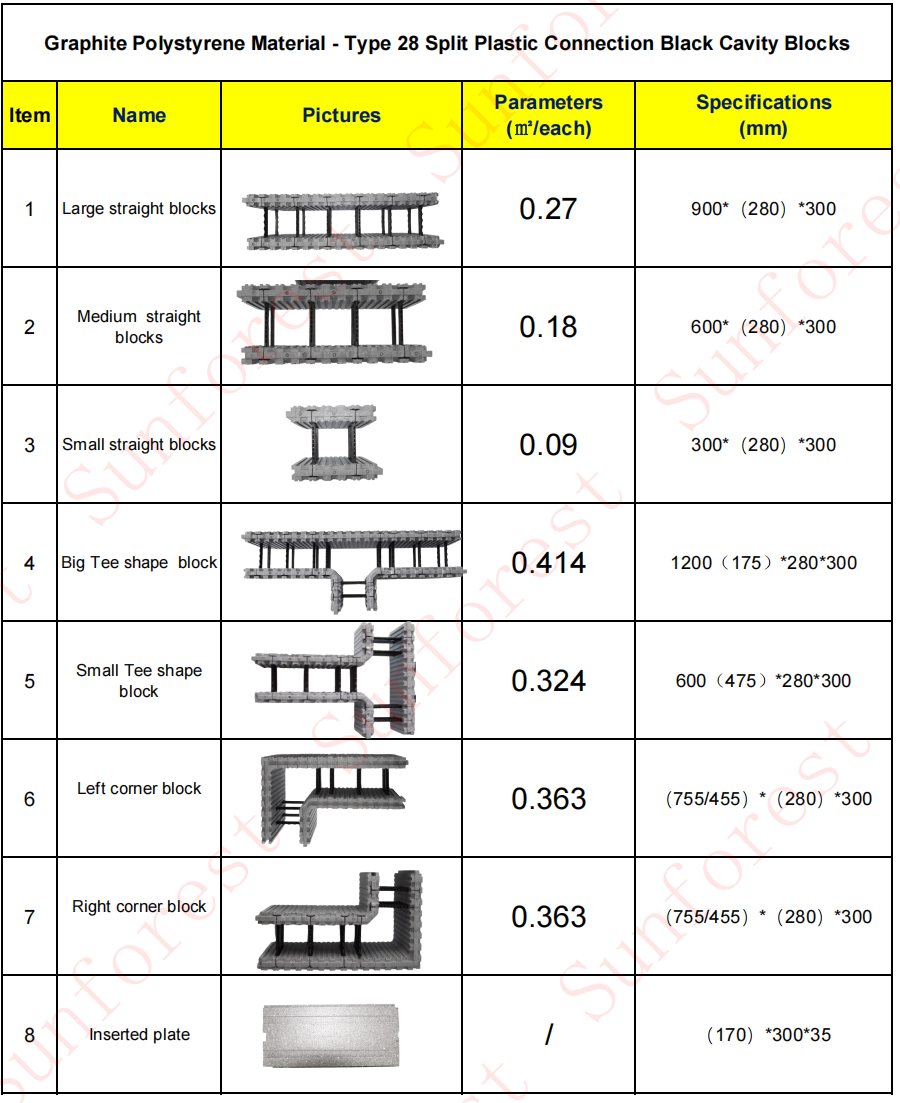
Full Split ICF Shape Range (250mm/280mm lines)
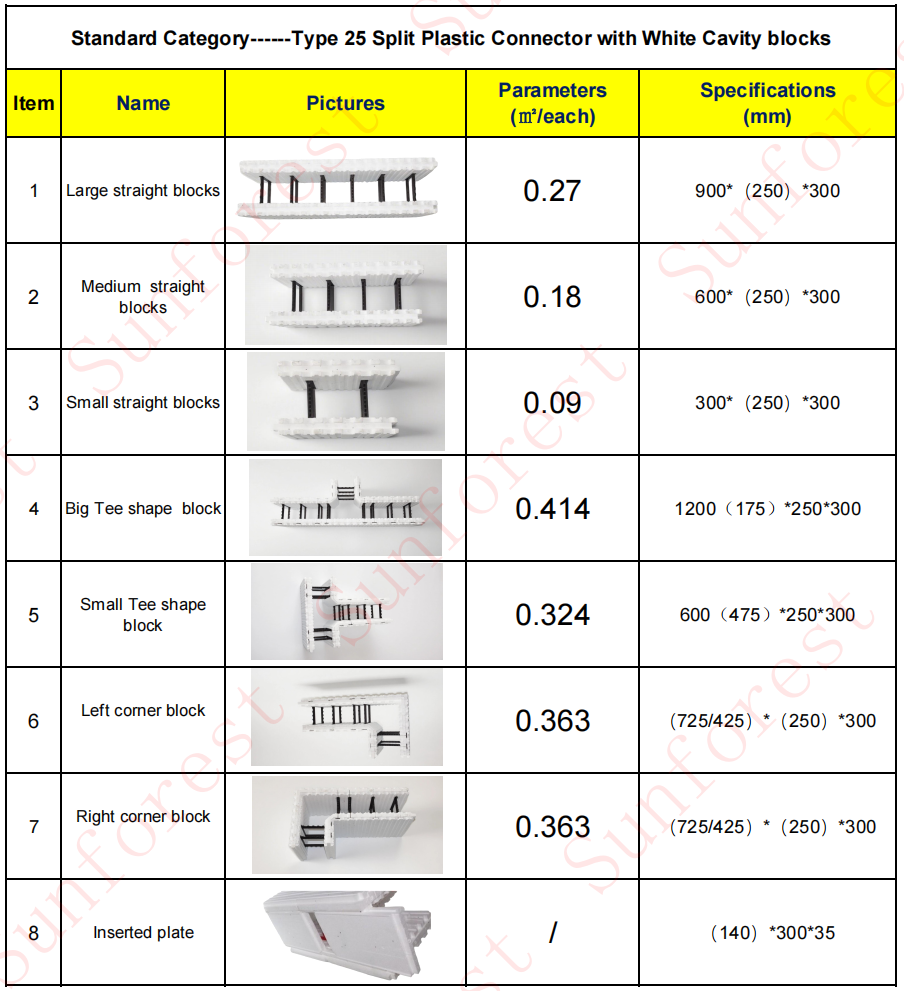
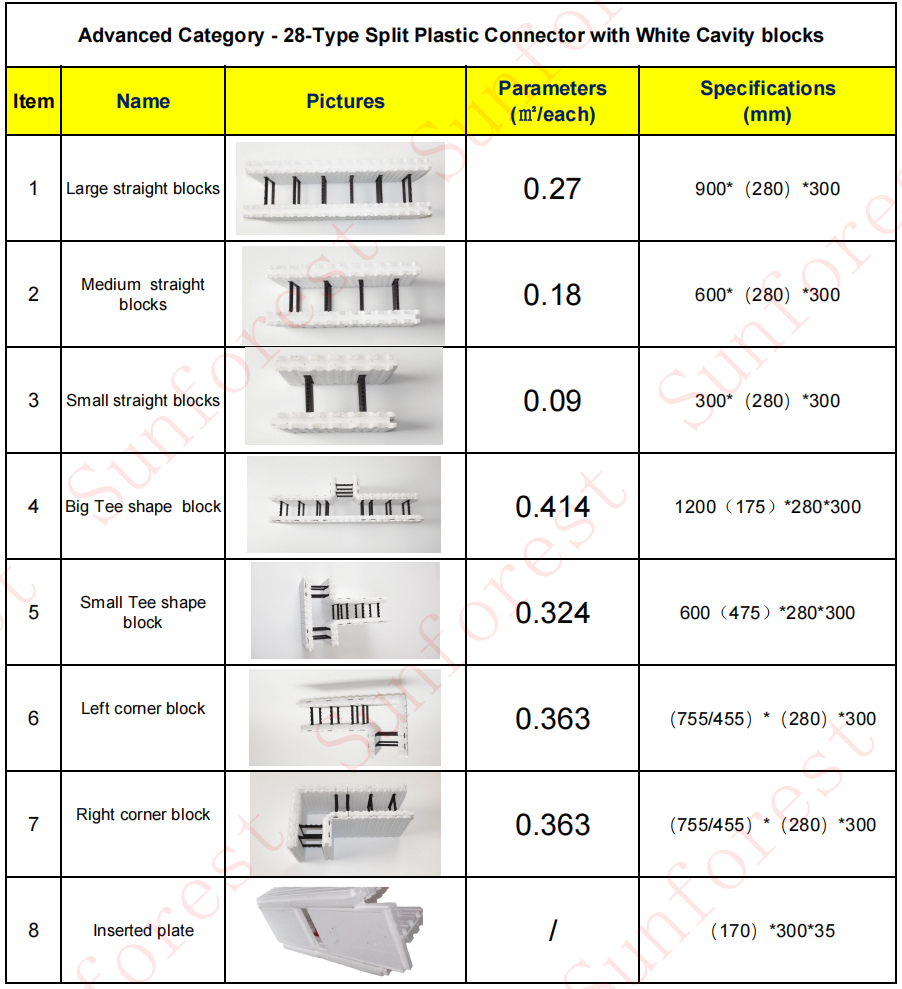
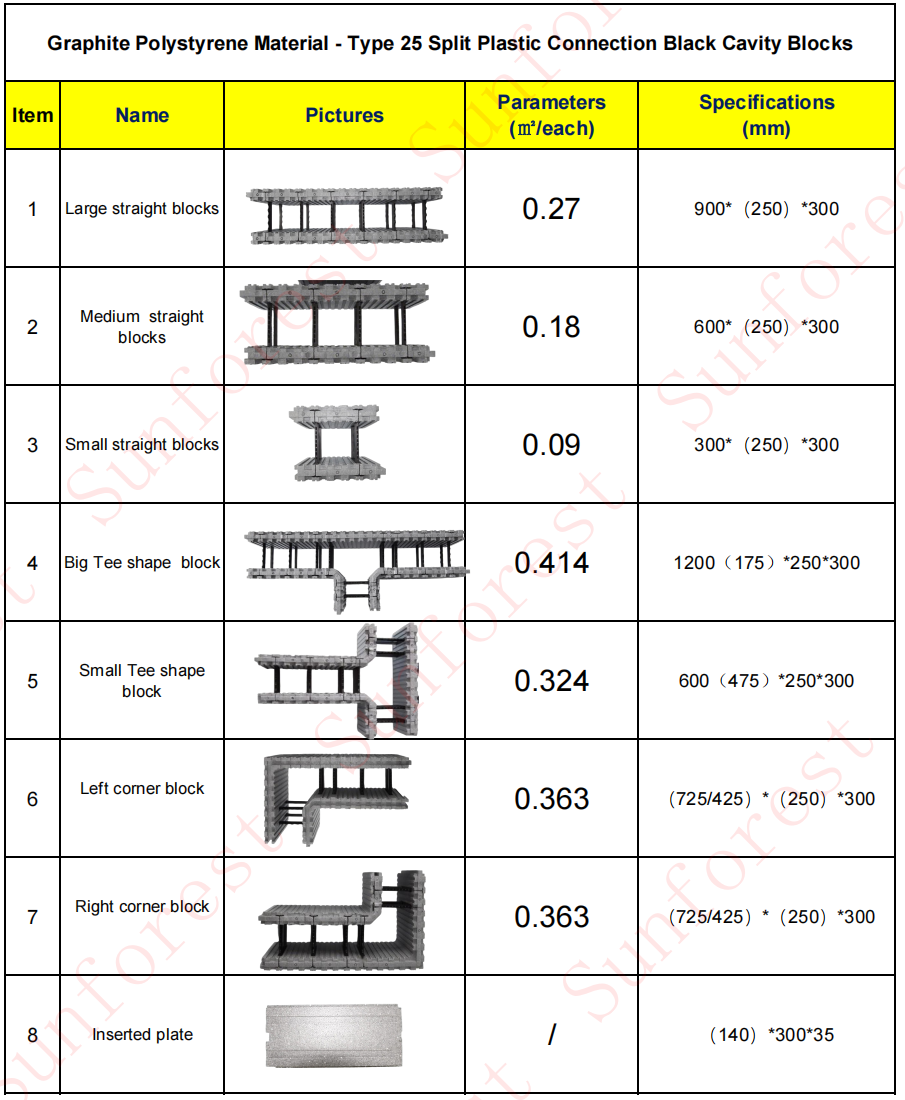
A Split ICF wall system is only useful if it covers real building geometry, not just straight runs. Sunforest's split lines include:
The 350mm Passive Line: Split Design in Development
Sunforest also manufactures a 350mm passive/ultra-low-energy ICF line (graphite EPS, 160mm outer panel + 60mm inner panel + 130mm concrete core). Today, this line is still produced as a one-piece integrated module because of its larger cross-section — which means, honestly, it does not yet carry the full container-utilization advantage of the split lines (a 40ft container currently holds approximately 190 m² of one-piece 350mm modules). Sunforest is currently developing a split-type version of the 350mm line, applying the same assembled-panel logic used in the 250mm/280mm lines, specifically to improve 350mm container loading efficiency. Buyers evaluating 350mm should factor this development stage into freight planning until the split version is released.
The Three Practical Advantages of Split ICF: Container, Storage, and Cost
1. Container Loading Advantage
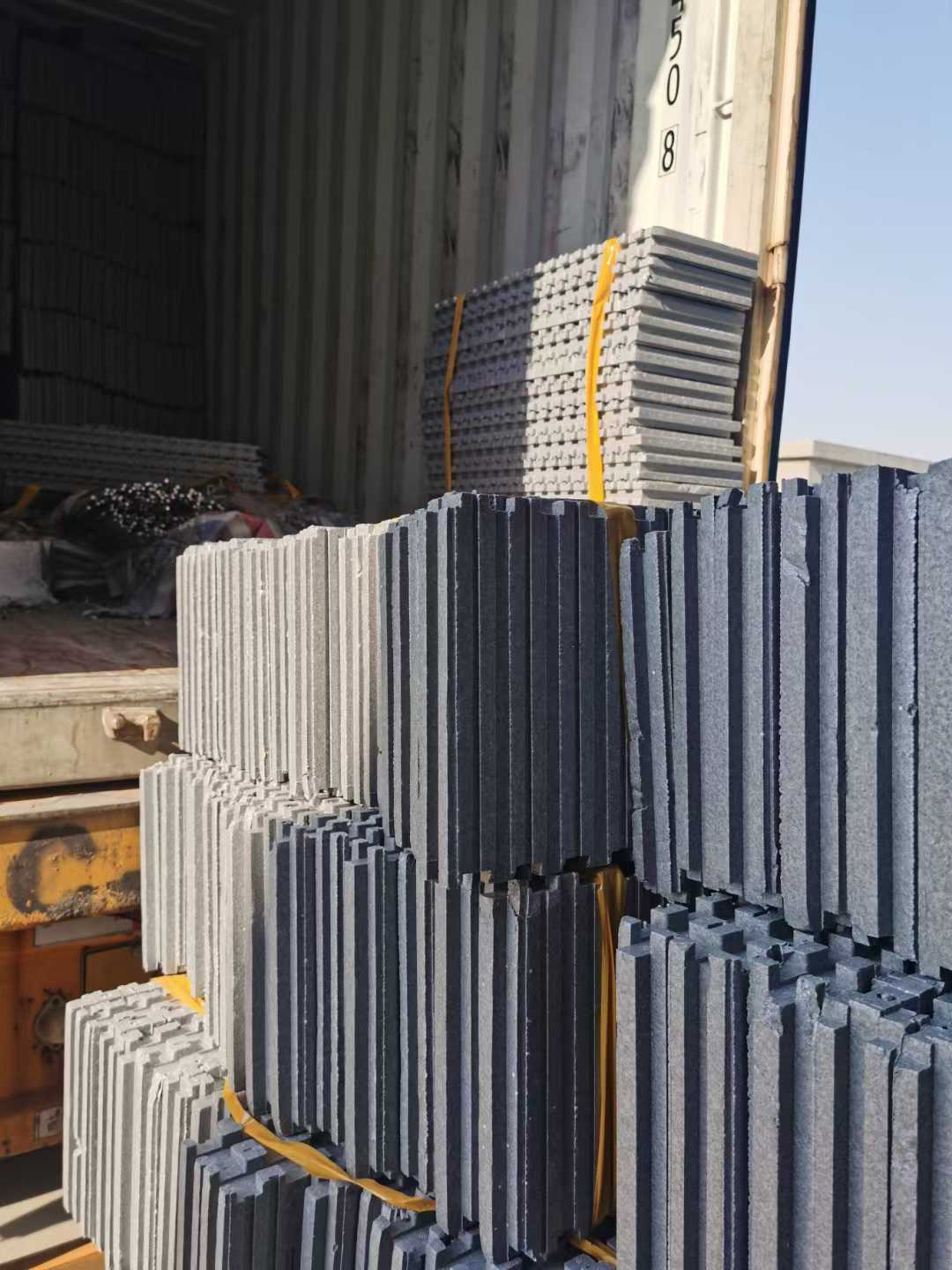
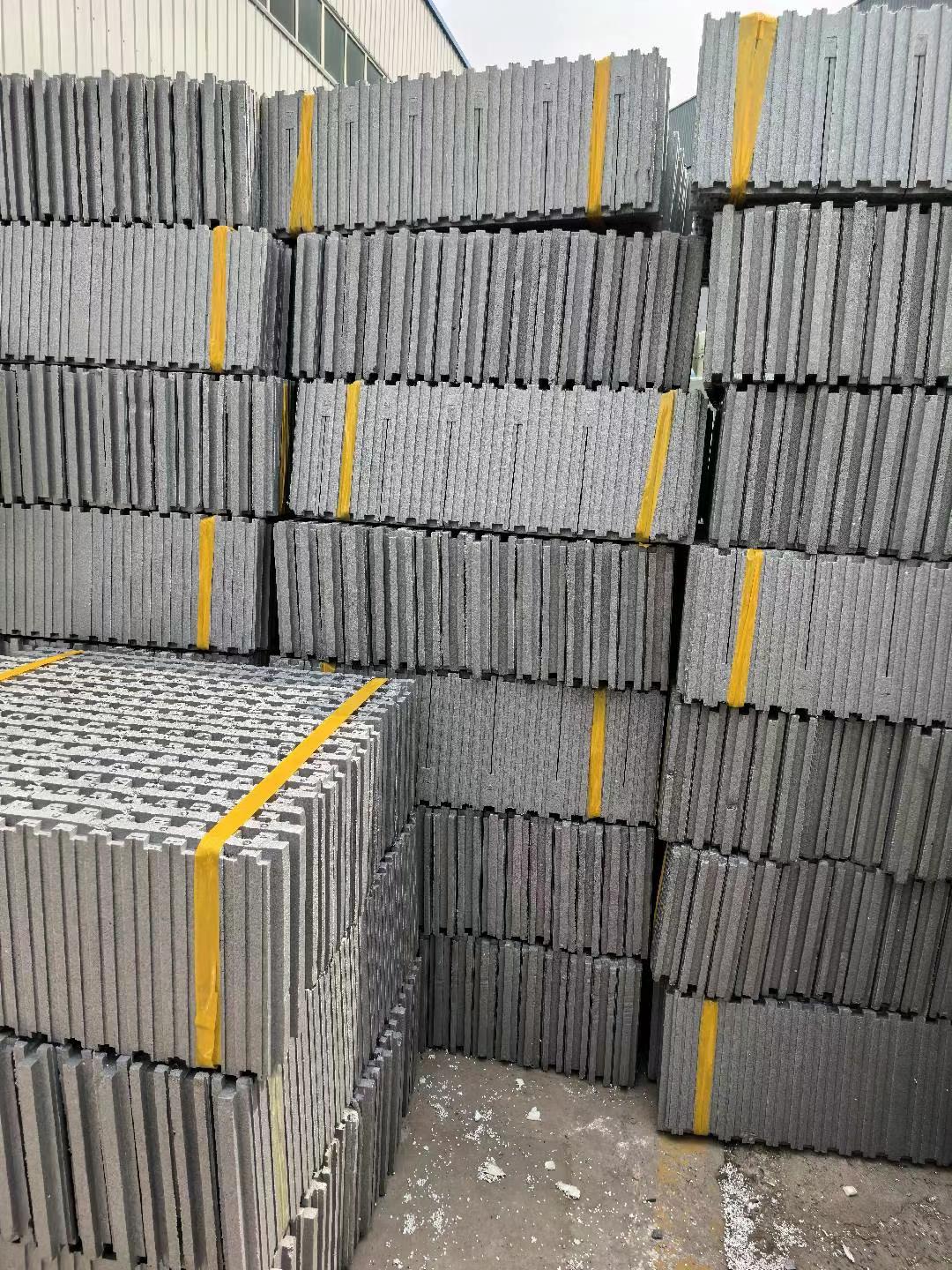
The entire reason Sunforest engineered a split system was container utilization. One-piece ICF blocks are bulky-but-light — they hit a container's cubic volume limit long before its weight limit, which means a large share of paid freight capacity ships as air, not product. By breaking the block into separate EPS panels and connectors, the split design packs tighter and reduces wasted container volume, which directly lowers freight cost per square meter of finished wall coverage — the metric that actually matters to a builder pricing a job, not per-block price in isolation.
Volume Comparison: 8 × Straight ICF Blocks (900×280×300mm) — Loose vs. Packed
Total volume of 8 blocks, unpacked
Volume per block = 0.9m × 0.28m × 0.3m = 0.0756 m³
Total for 8 blocks = 0.0756 × 8 = 0.6048 m³
Packed volume (per Sunforest official packaging data)
The 900×(250/280)×300mm Straight ICF (Big) is packed 1×8 (8 pieces per pack), with outer package dimensions of 90×90×30cm, giving a packed volume of 0.243 m³ .
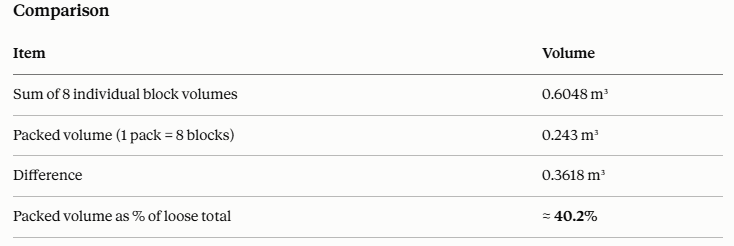
In other words, the "loose" combined volume of 8 stacked blocks is about 2.49 times the actual packed volume. The packed volume is only around 40% of the sum of the individual block volumes — reflecting the blocks' interlocking/hollow-core structure, which allows for much more efficient use of packing space than simple stacking would suggest.
2. On-Site and Warehouse Storage Advantage
The same geometry that improves container loading also improves what happens after the container is unloaded. Flatter, panel-based components stack more densely on pallets and in yard storage than bulky pre-formed one-piece blocks of the same coverage area — a practical benefit for distributors and rental yards working with limited warehouse footprint, and for jobsites with constrained laydown space where material has to be staged before a pour.
3. Cost Advantage
Freight is one of the largest, and most controllable, cost components in an international ICF order. Because the Split ICF design directly targets container utilization — the main driver of freight cost per m² for lightweight foam cargo — it lowers landed cost without changing the finished wall's material specification. For distributors and builders comparing supplier quotes, total landed cost per square meter (product + freight) is a more accurate comparison point than FOB unit price alone, and split-line container efficiency is where that comparison tends to favor the design.
Material and Performance: What "Density" Actually Means Here
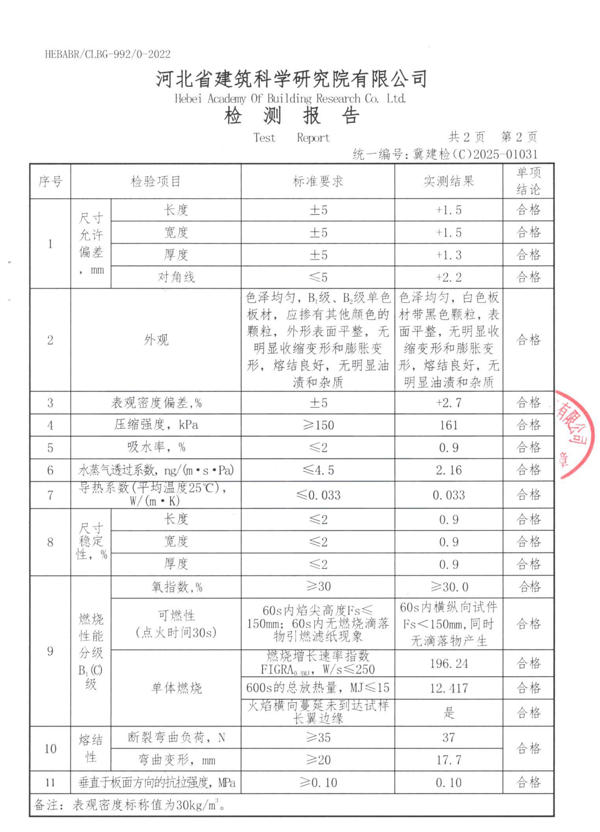
Sunforest's Split ICF EPS material has been independently tested by the Hebei Academy of Building Research Co., Ltd., a CMA-certified testing institution (report No. 冀建检(C)2025-01031). The tested sample — a 250mm-line block, grade 033, Type III, nominal apparent density of 30kg/m³ — returned:
Compressive strength: 161 kPa (standard requires ≥150 kPa) — Pass
Apparent density deviation: +2.7% (standard requires ≤5%) — Pass
Thermal conductivity (avg. 25°C): 0.033 W/(m·K) (standard requires ≤0.033 W/(m·K)) — Pass
Water absorption: 0.9% (standard requires ≤2%) — Pass
Combustion classification: B1(C) grade per GB 8624-2012
This density and performance data was generated on the 250mm-line sample; since the EPS material grade is shared across the 250mm/280mm split lines, it serves as a reliable material reference across both, though buyers evaluating the 280mm or 350mm lines specifically should confirm current spec sheets with Sunforest's export team. (Separately, Sunforest's lightweight roof insulation panels use a different, lower nominal density of 20kg/m³ — a distinct product from the wall-panel EPS above.)
Two material options are available across the Split ICF lines: regular EPS (white cavity) for standard insulation performance, and graphite composite EPS (black/dark gray cavity) for enhanced thermal performance in the same panel footprint.
Why This Matters for International Builders and Distributors
For contractors and distributors in North America, the Middle East, Europe, Australia, and East Asia sourcing ICF directly from a Chinese manufacturer, the Split ICF system is a concrete example of engineering built around export economics, not just domestic production convenience:
Manufacturer-engineered, not a generic catalog item — connector type, thickness, and material are matched at the factory, produced to consistent tolerances across every order.
Freight-aware product design — the split geometry exists specifically to solve the volume-vs-weight mismatch that makes lightweight foam ICF expensive to ship internationally.
Full wall geometry coverage — straight, Tee, and corner shapes ship in the same split-panel logic, not just simplified straight runs.
Paired with Sunforest's own ICF bracing system — the same manufacturer that engineers the Split ICF wall form also produces the Q235 steel bracing used to align and pour it, so buyers can source a full wall system, not just forms, from one supplier.
Frequently Asked Questions
What is a Split ICF wall system, and how is it different from a one-piece ICF block?A Split ICF wall system is manufactured as separate EPS side panels joined by a factory-engineered plastic connector, rather than as a single molded one-piece foam cavity block. Once assembled, it functions as a standard ICF form; the split design exists primarily to reduce shipping volume and improve container utilization for lightweight foam cargo.
Why does Split ICF design matter for international freight cost?ICF blocks are bulky but lightweight, so shipments typically hit a container's cubic volume limit before its weight limit — meaning a large portion of paid freight space carries air rather than product. Split ICF panels pack more densely, which reduces wasted volume and lowers freight cost per square meter of finished wall coverage.
What thickness options does Sunforest offer in the Split ICF line?Sunforest's standard Split ICF lines are 250mm (Type 25 connector, generally used for interior walls or smaller exterior applications) and 280mm (Type 28 connector, Sunforest's recommended exterior wall thickness for insulated homes). A 350mm passive/ultra-low-energy line is also available, currently produced as one-piece with a split version in development.
What EPS density does Sunforest use in its Split ICF blocks?Sunforest's CMA-certified test report documents a nominal apparent density of 30kg/m³ for the tested 250mm-line sample (grade 033, Type III), which serves as the material reference across the 250mm/280mm split lines. Buyers should confirm current specifications for a specific thickness or project with Sunforest's export team.
Does Split ICF come in graphite (black) EPS as well as regular white EPS?Yes. Both the 250mm and 280mm Split ICF lines are available in regular EPS (white cavity) and graphite composite EPS (black/dark gray cavity, for enhanced thermal performance).
Can Split ICF cover corners, Tee-joints, and openings, or only straight walls?The Split ICF product range includes straight blocks (900mm/600mm/300mm), Big and Small Tee-shape blocks for structural joints, left/right corner blocks, and insert closure blocks for door/window openings — covering the full wall geometry, not only straight runs.
Is the Split ICF system compatible with Sunforest's ICF bracing?Yes. Sunforest manufactures both the Split ICF wall forms and the Q235 steel ICF bracing/alignment system used to plumb, align, and brace the wall during the concrete pour, allowing customers to source a complete wall-forming system from one supplier.
Is Sunforest a manufacturer or a trading company?Sunforest (Hangzhou Sunforest Constech Co., Ltd) manufactures ICF and ICF bracing at its own facility in Hebei Province, China, with an export office in Hangzhou. The Split ICF design is a factory engineering decision, not a resold catalog product, which is why Sunforest can offer OEM/ODM customization on connector type, material, and finish.
Sunforest ICF & ICF Bracing is manufactured by Hangzhou Sunforest Constech Co., Ltd. For split-line container loading calculations, thickness recommendations, or material spec sheets, contact the Sunforest export team.
Email:[email protected]
WhatsApp:+86 15715734057