Graphite ICF Blocks: Sunforest's High-Insulation "Graphene EPS" Product Range
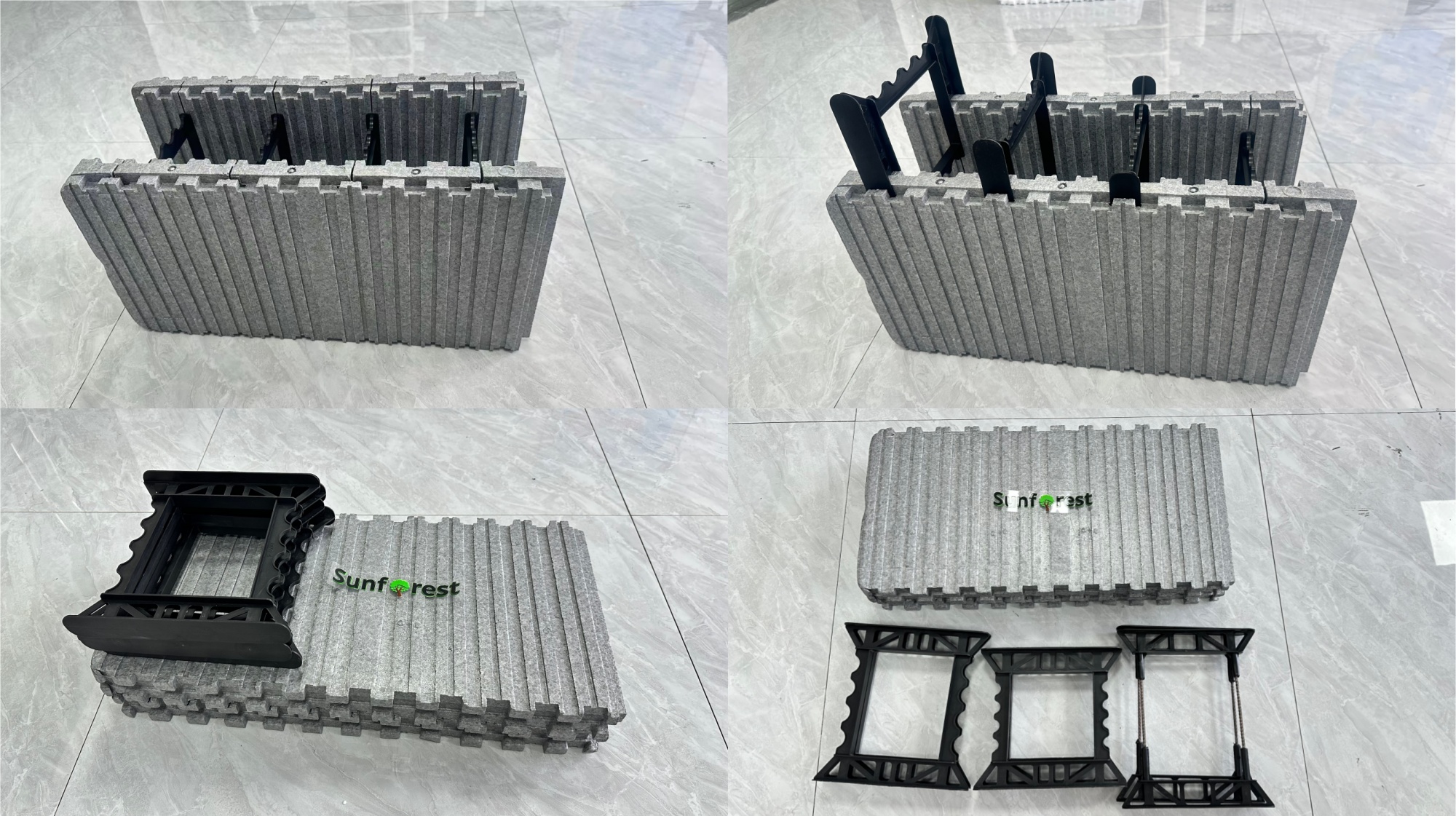
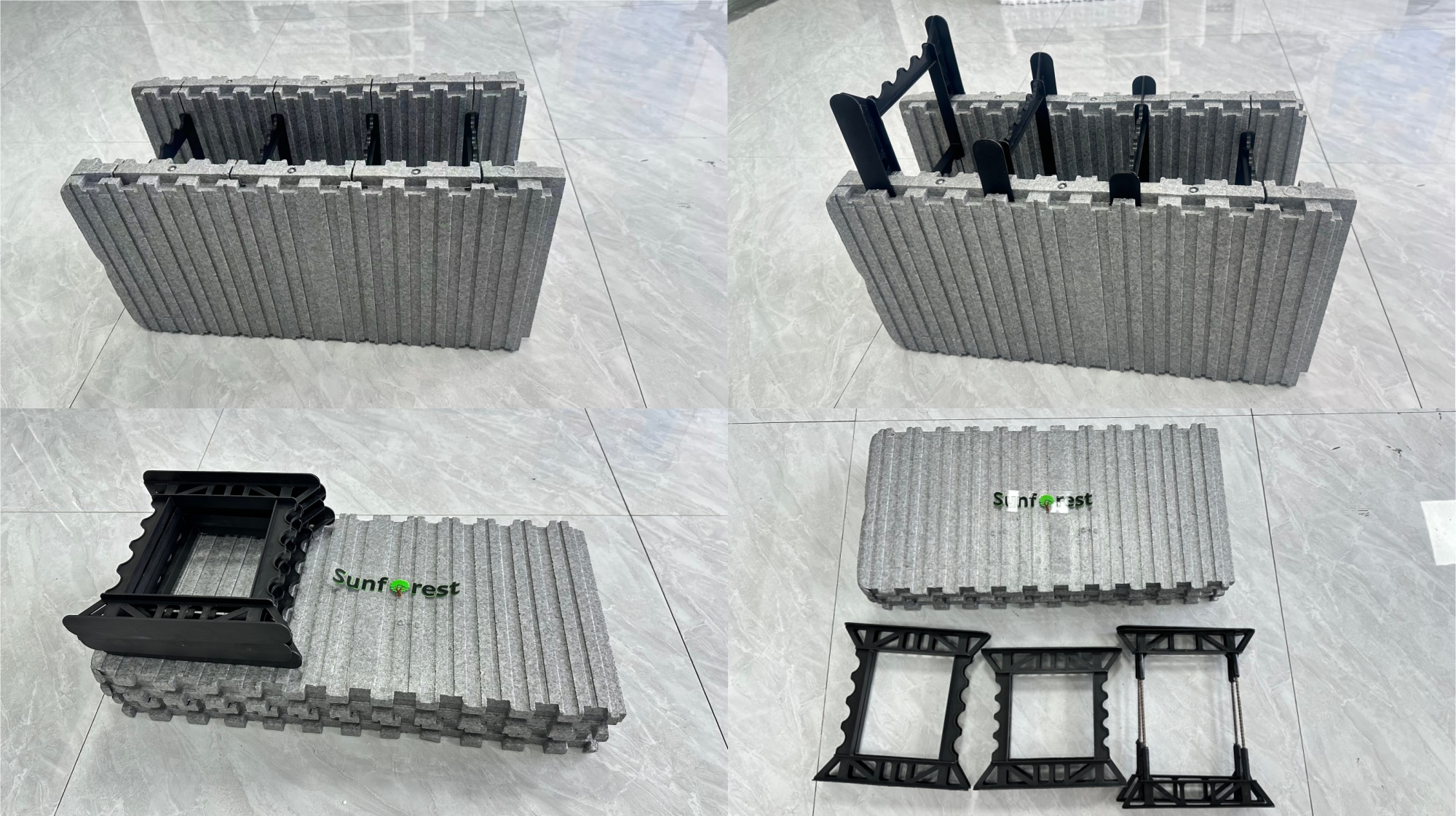
Graphite composite EPS ("graphene-type") ICF block range manufactured in-house by Sunforest, Hebei, China
Three product lines: 250mm split (Category C), 280mm split (Category D), 350mm passive one-piece (Type 35)
Graphite particles in the EPS cell structure lower radiative heat transfer, improving thermal resistance per unit thickness vs. white EPS
Suited to both hot-summer/high-cooling-load climates and cold-winter/high-heating-load climates
Same block shapes, dimensions, and split-connector system as Sunforest's standard white EPS line — no wall-layout changes needed to upgrade
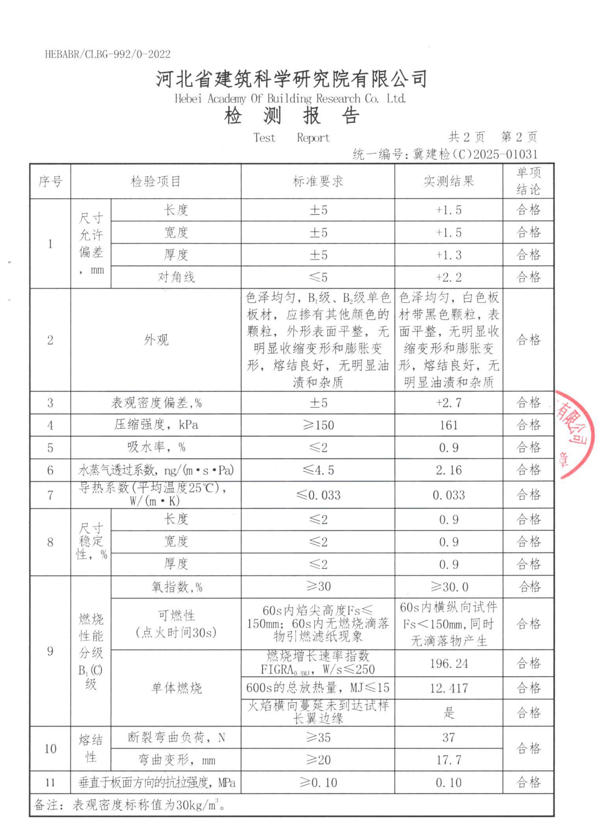
CMA-certified base EPS test data on file (compressive strength, water absorption, fire classification)
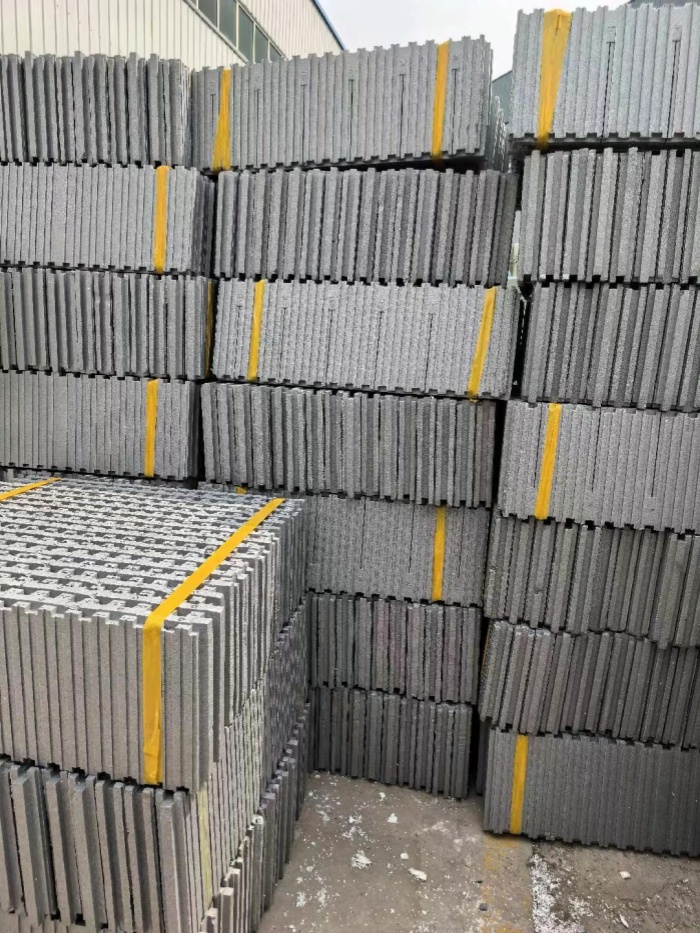
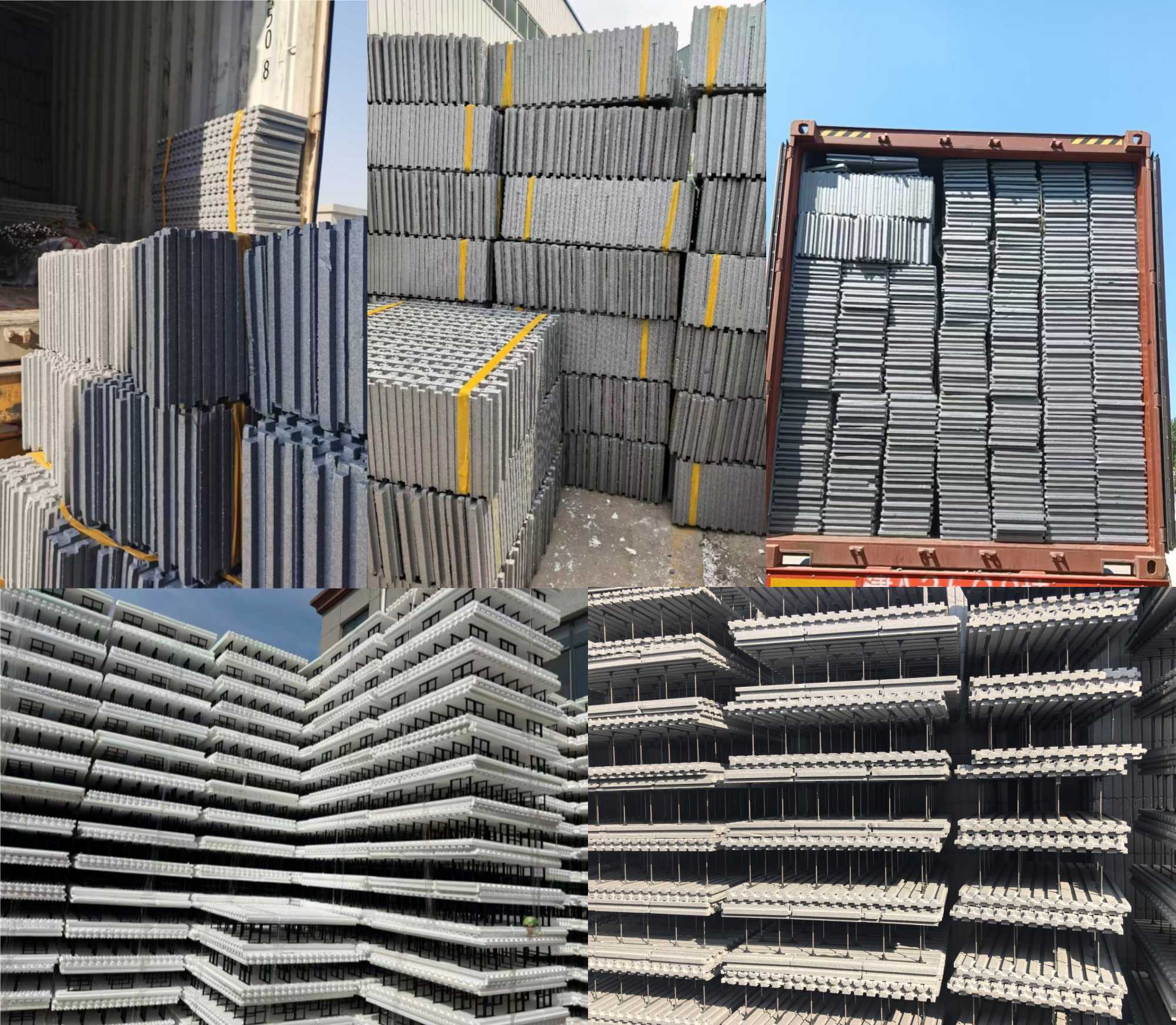
3-day standing-inventory shipment for standard blocks
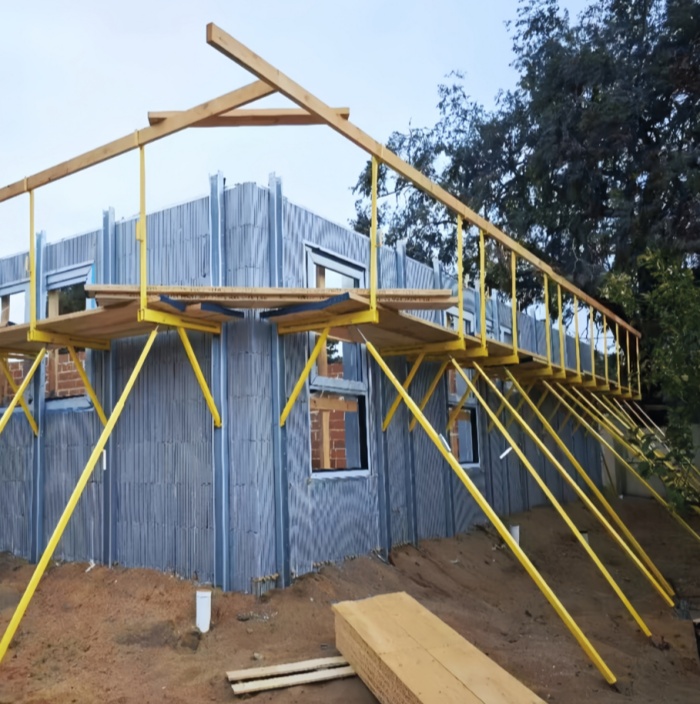
Full system available — graphite ICF blocks + Sunforest's own Q235 steel ICF bracing, from one manufacturer
Graphite ICF Blocks: Sunforest's High-Insulation "Graphene EPS" Product Range
Hangzhou Sunforest Constech Co., Ltd manufactures a graphite composite EPS ICF block range — often searched for under the market term "graphene ICF" — at its own production facility in Hebei Province, China,
with export support from its Hangzhou office. The range is built for builders and distributors in North America, Europe, the Middle East, Australia, and East Asia who need higher thermal performance than standard white EPS ICF, without changing wall dimensions, block shapes, or bracing setup.
Below is Sunforest's full graphite ICF product range, followed by an explanation of why graphite EPS insulates better and where it delivers the most value.
Sunforest's Graphite ICF Product Range
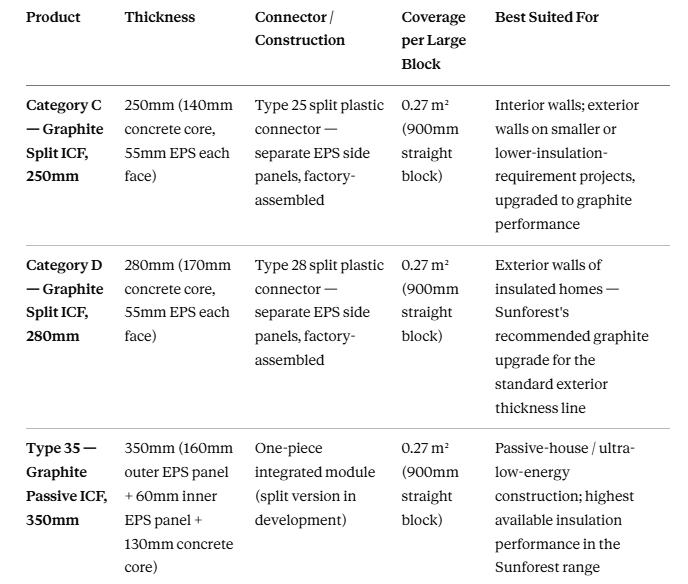
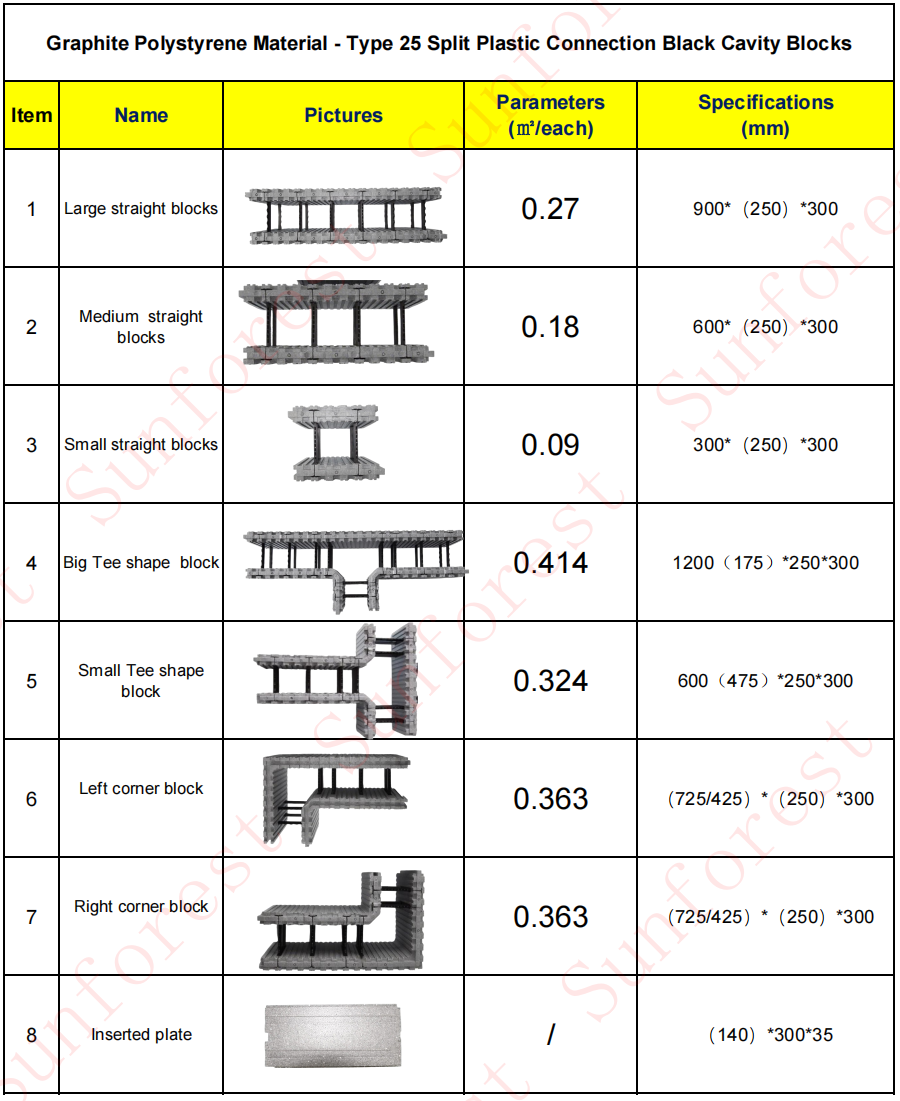
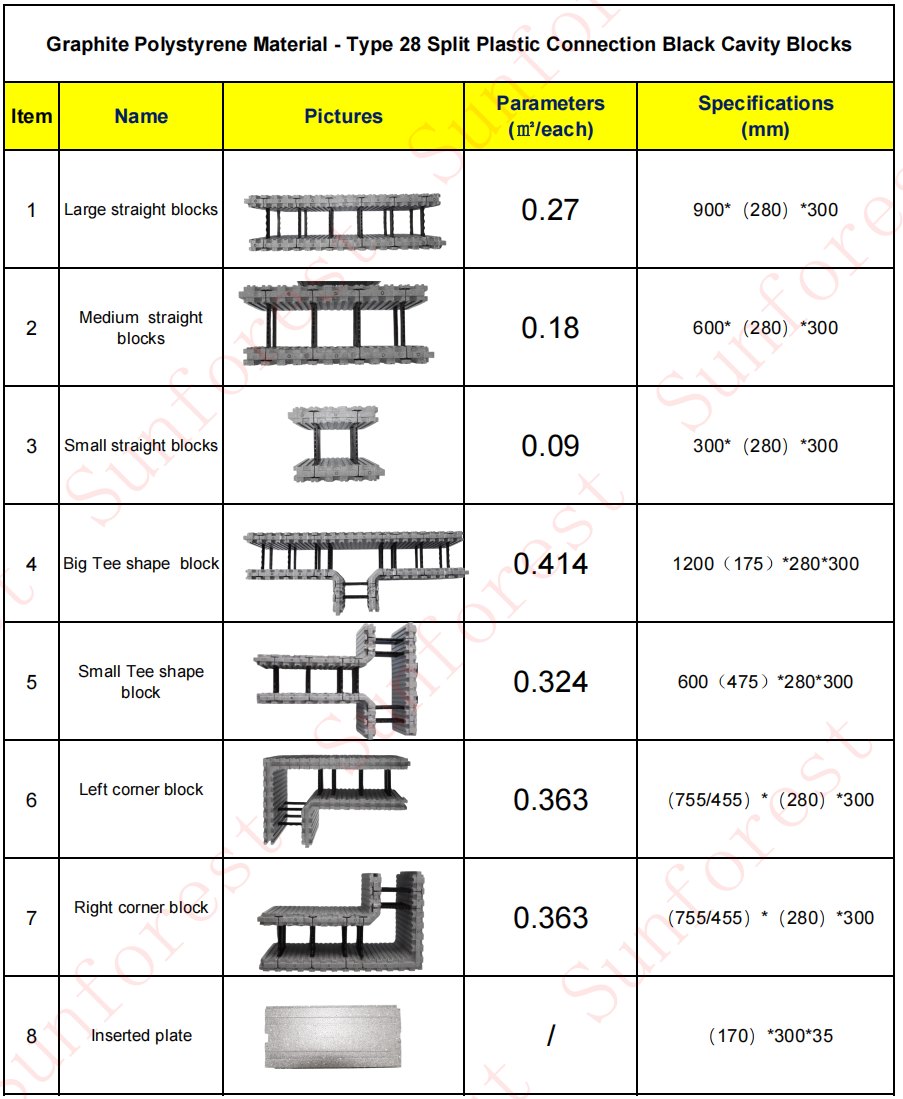
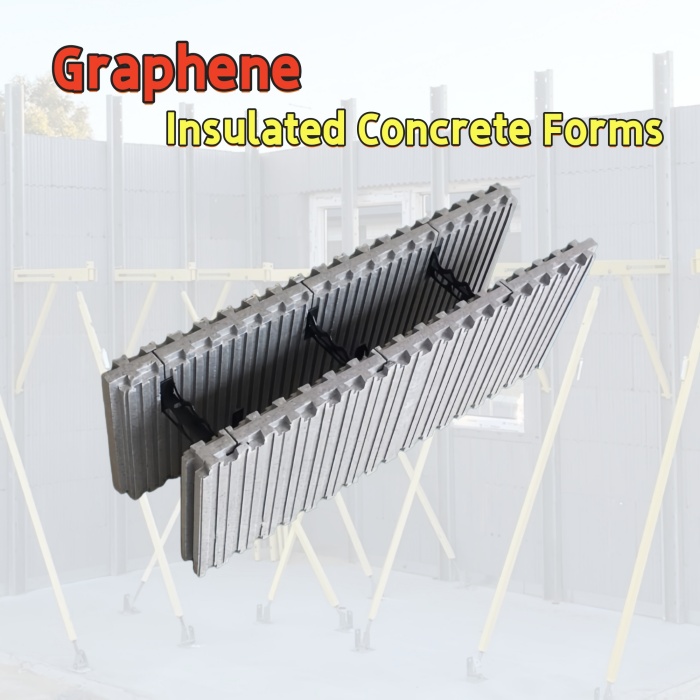
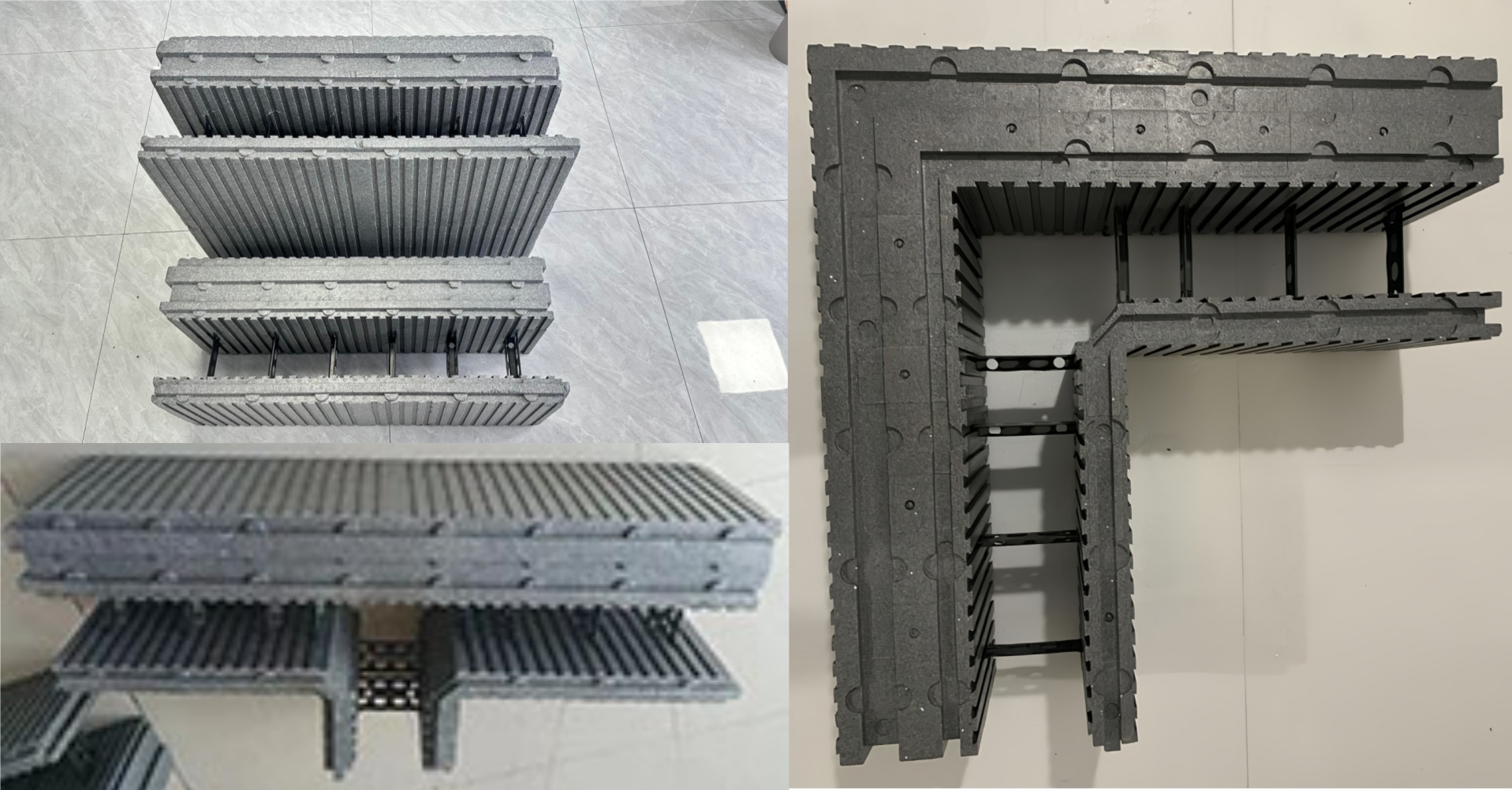
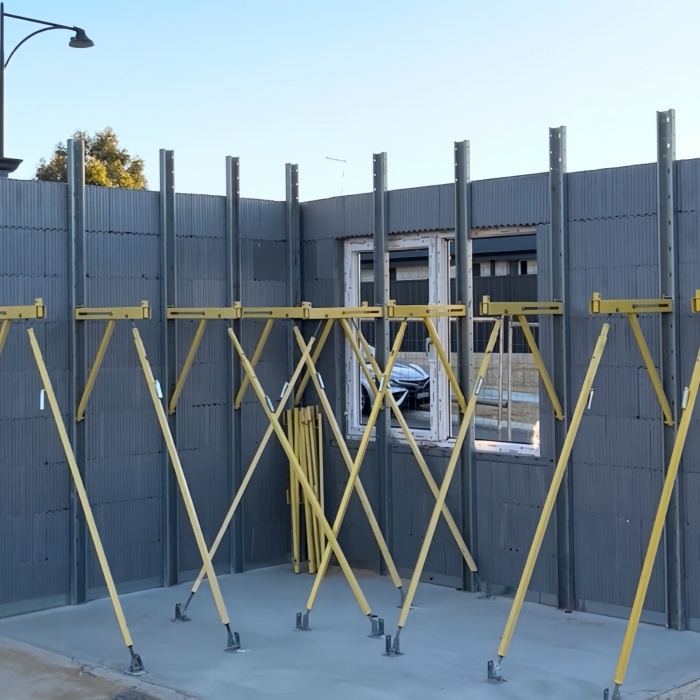
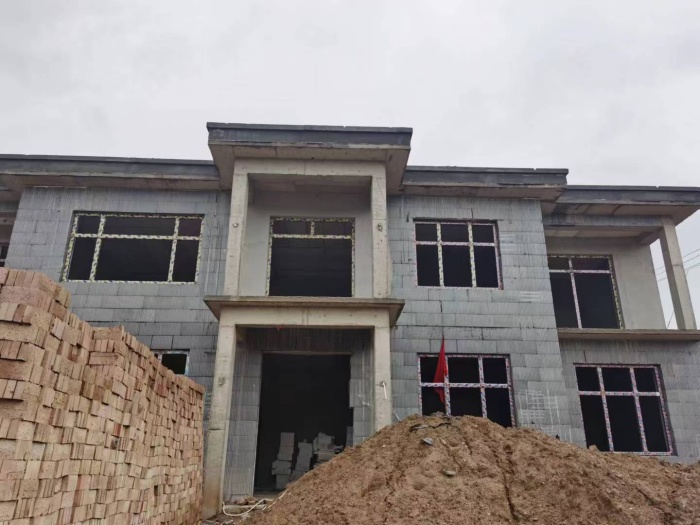
Category C and Category D are built on the exact same block geometry as Sunforest's standard white EPS split lines (Category A/B): 900mm/600mm/300mm straight blocks, Big and Small Tee blocks, left/right corner blocks, and insert closure blocks for door/window openings. The only difference is the cavity material — graphite composite EPS (black/dark gray) in place of regular EPS (white). This means a project already planned around Sunforest's standard split ICF dimensions can switch to the graphite line without re-planning wall layout, and both lines carry the same split-panel container-loading advantage.
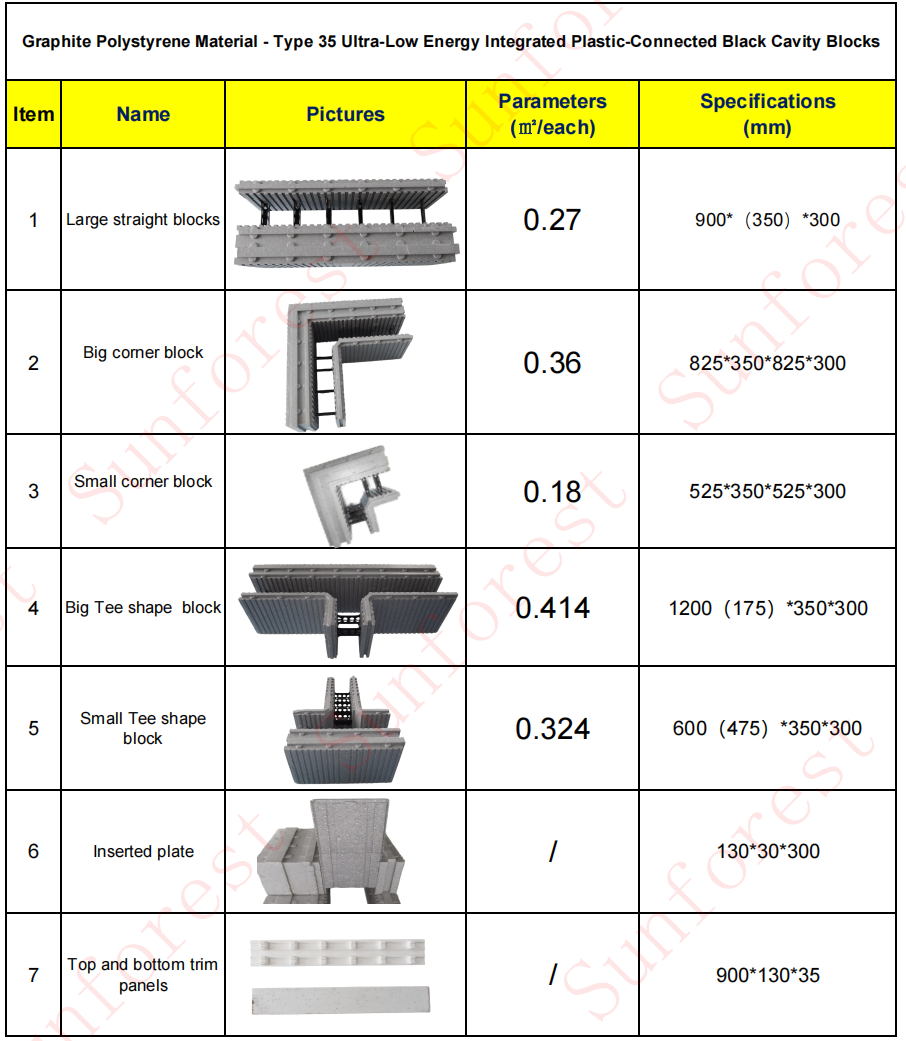
Type 35 is Sunforest's dedicated passive-performance product — not simply a thicker version of the standard line, but a distinct panel construction with its own accessory set, including a matching window/door sill cover and a passive roof panel with built-in C-shaped steel support for the roof structure. It currently ships as a one-piece integrated module; a split-type version is in development to bring the same container-utilization benefit to the 350mm line.
Why Graphite EPS Insulates Better Than Standard White EPS
Sunforest's graphite ICF material is graphite composite EPS (graphite polystyrene) — expanded polystyrene manufactured with graphite particles distributed through the cell structure. This is the same general technology behind widely used "gray EPS" or "black EPS" insulation products across the construction industry, and it is what most buyers are actually looking for when they search "graphene ICF" or "graphene insulation."
Heat moves through standard white EPS foam through a mix of conduction and radiative transfer across the cell structure. Embedding graphite particles into the cell walls is an established method across the EPS insulation industry for reducing that radiative component — the particles absorb and scatter infrared radiation moving through the material, lowering the foam's effective thermal conductivity compared to the same density and thickness of regular white EPS. The practical result: for the same wall thickness, a graphite ICF block generally delivers better thermal resistance than a white EPS block — which is the real driver of graphite EPS's insulation and energy-saving benefit, more than the surface color itself (once a wall is finished with exterior cladding or stucco, the EPS core's color has no bearing on the completed building's performance — the graphite content inside the cell structure is what does the work).
Sunforest's CMA-certified third-party test report on file (Hebei Academy of Building Research, report No. 冀建检(C)2025-01031) documents the base EPS material's compressive strength (161 kPa), thermal conductivity (0.033 W/(m·K)), water absorption (0.9%), and B1(C) fire classification for the standard-grade 250mm sample. Buyers who need a dedicated graphite-grade thermal conductivity figure for a specific project or energy-code submission should request the current graphite-line spec sheet directly from Sunforest's export team.
Real-World Application Advantages
Hot-Climate / High-Cooling-Load Regions
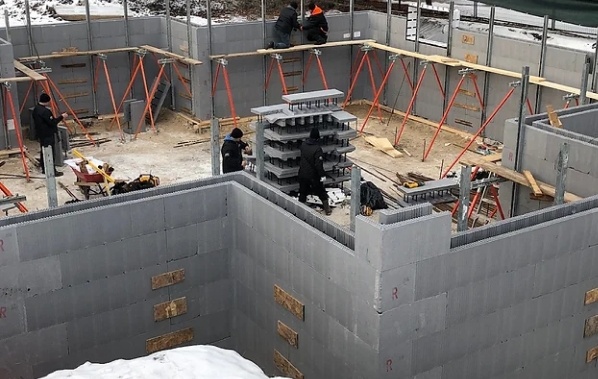
Western Europe's 2026 summer was, by EU climate-monitor data, its hottest June–July on record, with repeated heatwaves pushing temperatures above 40°C across the UK, France, Spain, Germany, and Ireland. In climates like this — Southern and Western Europe, the Middle East and Gulf region, and hot-summer parts of Australia and the United States — a lower-conductivity wall assembly reduces the cooling load a building's HVAC system has to work against, translating directly into lower energy consumption during peak-heat periods.
Cold-Climate / High-Heating-Load Regions
The same principle works in reverse for the Nordics, Canada, and the northern United States, where winter heating load drives energy cost and often building-code insulation requirements. A wall with lower thermal conductivity per unit of thickness retains interior heat more effectively across long, cold winters — one reason graphite/gray EPS is common in Northern European and Canadian insulation specifications generally, independent of any single supplier.
Energy-Saving and Passive-Performance Projects
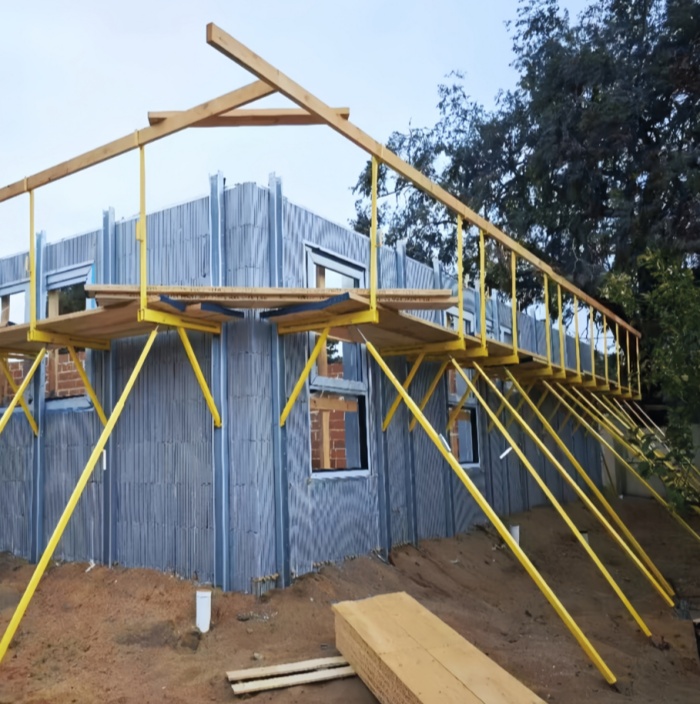
For projects specifically targeting passive-house or ultra-low-energy standards — an increasingly common requirement in both EU energy-code markets and North American high-performance residential construction — Sunforest's Type 35 350mm graphite line is engineered as a dedicated passive-performance product, giving builders a documented, purpose-built option rather than a generic "thicker block."
A Separate, Complementary Factor: Exterior Finish Color in Cold Climates
It's worth separating two distinct effects that both get discussed under "graphite ICF and cold climates," because only one of them is a property of the block itself. The first — covered above — is the graphite composite EPS core's lower thermal conductivity, which reduces heat loss through the wall assembly regardless of what the exterior finish looks like. The second is a well-known, general building-science effect that applies to the exterior finish/cladding color, not the ICF core: a darker exterior surface (dark stucco, dark render, dark siding, or an exposed dark EPS/finish coat in some system types) absorbs more solar radiation than a light-colored surface, giving it a modest passive solar-gain benefit in cold, sun-exposed climates — the same reason dark roofing and dark cladding are common choices in some Nordic and northern-latitude building traditions. This effect is a function of the outward-facing finish surface, not of the graphite content sealed inside the wall core, so it is a design/finish decision a builder makes independently of which ICF core material is used underneath.
For buyers in cold, sun-exposed markets, the two effects are complementary rather than the same thing: the graphite EPS core reduces conductive/radiative heat loss through the wall itself, while a darker exterior finish (chosen at the cladding stage) can add a secondary passive solar-gain benefit on sun-facing elevations. Framing them as one combined "color equals insulation" claim would overstate what the core material does — Sunforest keeps the two points distinct so builders and specifiers can evaluate each on its own merits.
Why Source Graphite ICF From Sunforest
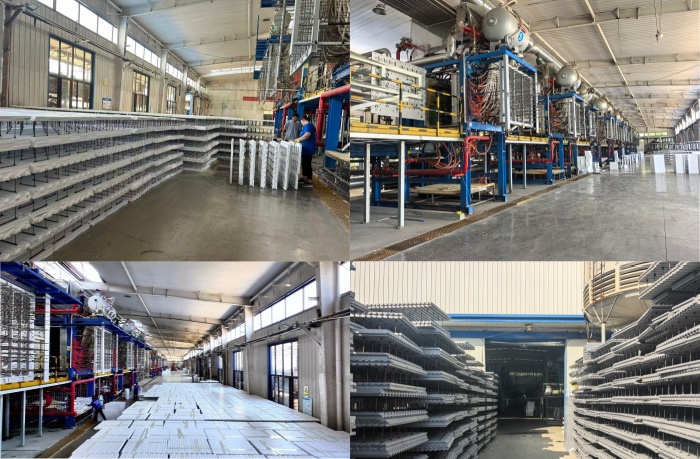
In-house material control — Sunforest produces the graphite composite EPS itself rather than reselling third-party foam, so graphite content, density, and connector fit are controlled at the factory across every order.
Drop-in upgrade path — Category C/D use the identical block shapes and split-connector system as Sunforest's standard white EPS line, so switching to graphite doesn't require re-engineering wall layout or bracing spacing.
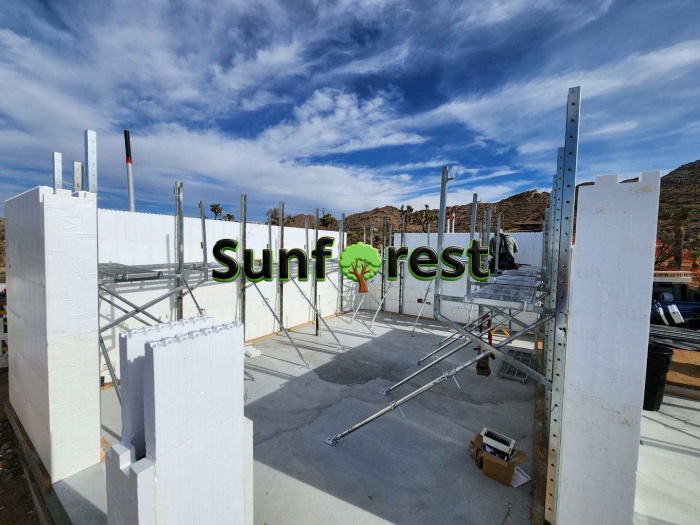
One supplier for the full wall system — Sunforest also manufactures the Q235 steel ICF bracing used to align and pour the wall, and can match bracing surface treatment (hot-dip galvanizing, powder coating) to the same climate the graphite blocks are specified for.
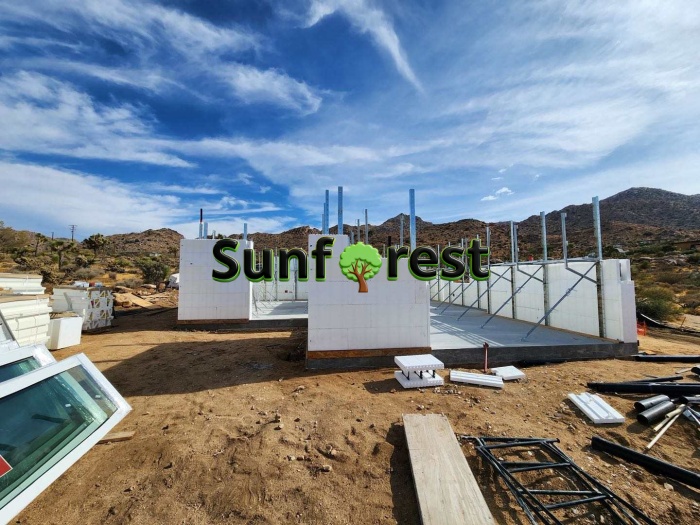
Export-ready logistics — standard blocks are typically packed and ready to ship within 3 days from standing inventory; documentation for customs clearance is prepared in advance.
Independently verified base material — CMA-certified third-party test data is on file, giving buyers documented performance data rather than marketing claims alone.
Frequently Asked Questions
What graphite ICF block sizes does Sunforest manufacture?Sunforest's graphite ICF range covers 250mm (Category C, Type 25 split connector), 280mm (Category D, Type 28 split connector), and a 350mm passive/ultra-low-energy line (Type 35), currently produced as a one-piece module with a split version in development.
Is "graphene ICF" the same as "graphite ICF"?In the ICF and EPS insulation industry, "graphene ICF" is commonly used as a market term for what is technically graphite composite EPS — expanded polystyrene with graphite particles distributed through the cell structure, not sheet-form graphene. Sunforest's product is graphite composite EPS, matching what most buyers mean by either term.
Why does graphite EPS have better insulation performance than white EPS?Graphite particles embedded in the EPS cell structure absorb and scatter infrared radiation, reducing the radiative component of heat transfer through the material. This generally lowers thermal conductivity compared to white EPS of the same density and thickness — a method used broadly across the EPS insulation industry, not unique to any one factory's formulation.
Does the dark color of graphite ICF itself help with insulation?Not directly — once a wall is finished with exterior cladding, stucco, or siding, the EPS core's surface color has no effect on the completed building's thermal performance. The insulation benefit comes from the graphite particles inside the EPS cell structure, not the visible surface color.
Does a dark exterior finish over graphite ICF add extra cold-climate benefit?It can, but it's a separate effect from the ICF core itself. A darker exterior cladding or render surface absorbs more solar radiation than a light-colored one, giving a modest passive solar-gain benefit on sun-facing walls in cold climates — a general building-science effect tied to the outward-facing finish, not to the graphite content sealed inside the wall. The graphite EPS core's insulation benefit (lower thermal conductivity) works regardless of exterior finish color; a dark exterior finish is an independent design choice that can add a complementary, secondary benefit in cold, sun-exposed locations.
Is graphite ICF better for hot climates or cold climates?Both. Lower thermal conductivity per unit of wall thickness reduces heat transfer in either direction — helping limit cooling load in hot-summer regions (Southern/Western Europe, the Middle East, hot-summer Australia and U.S. states) and limit heat loss in cold-winter regions (the Nordics, Canada, the northern United States) alike.
Can graphite ICF blocks (Category C/D) be mixed with standard white EPS blocks (Category A/B) on the same project?Yes. Categories C/D share identical dimensions and connector types with Categories A/B, so a project can use graphite blocks on higher-performance walls or elevations and standard white EPS blocks elsewhere, without changing wall layout or bracing.
Do the 250mm and 280mm graphite lines have the same shipping/container advantage as the standard split ICF line?Yes — Categories C and D use the same assembled-panel, split-connector architecture as Sunforest's white EPS split lines, so they carry the same container-utilization advantage. The 350mm graphite passive line (Type 35) is currently one-piece and does not yet carry this advantage.
Is Sunforest a manufacturer or a trading company?Sunforest (Hangzhou Sunforest Constech Co., Ltd) manufactures its ICF blocks — including the graphite line — and its ICF bracing system at its own facility in Hebei Province, China, with an export office in Hangzhou. Material formulation and connector engineering are handled in-house, which is why Sunforest can provide detailed graphite content, density, and connector-fit information directly, rather than reselling third-party product.
Sunforest ICF & ICF Bracing is manufactured by Hangzhou Sunforest Constech Co., Ltd. For split-line container loading calculations, thickness recommendations, or material spec sheets, contact the Sunforest export team.
Email:[email protected]
WhatsApp:+86 15715734057